

When should you hire a post-construction cleaning service in Ho Chi Minh City?
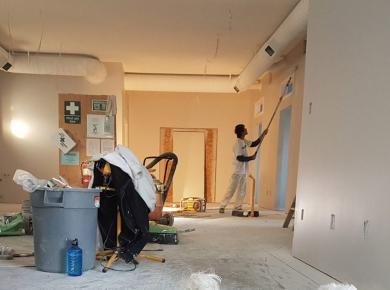
This service is ideal when your property has completed construction or renovation but is not yet ready for use due to fine dust, paint residue, adhesive, and cement stains. The process typically includes four main steps: site inspection, surface-based task division, proper stain removal, and final quality checks before handover.
- Assess actual dirt level
- Classify surfaces and materials
- Clean from rough to detailed areas
- Final inspection before handover

A newly built house may look clean at first glance, but construction dust often settles deep into corners, window frames, floors, and sanitary fixtures. Improper cleaning can easily scratch or dull newly finished surfaces. Phuong Gia Foundation provides post-construction cleaning services in Ho Chi Minh City with a structured approach—clear scope, correct sequence, and surface-appropriate methods—suitable for townhouses, apartments, shophouses, and small offices preparing for move-in or handover.
When is post-construction cleaning necessary?
The best time is after major construction work is completed and the project enters its final finishing stage. Cleaning at this point prevents recontamination and makes it easier to detect remaining issues on glass, floors, grout lines, and fixtures.
Many homeowners only realize the need after moving in, when fine dust continues to appear on surfaces. Early cleaning is always more effective, especially before residues like adhesive or cement harden over time.
- After painting and wall finishing
- New apartment handover with construction dust
- Before installing soft furnishings
- Visible stains on glass, tiles, and fixtures
- Before moving in or handing over
What does a new house cleaning service include?
A proper service goes beyond sweeping and mopping. It covers both leftover construction debris and delicate finished surfaces to ensure the property is clean and ready for use.
Tasks are typically divided by area and surface type. This allows the cleaning team to use the correct tools and methods, minimizing the risk of damage.
Dry areas and living spaces
These areas mainly contain fine dust, light paint residue, and adhesive traces. Proper initial cleaning helps prevent dust from spreading during later stages.
- Ceilings, wall edges, skirting boards
- Doors, windows, frames, handles
- Built-in cabinets, shelves, staircases
- Floors, balconies, and common areas
Wet areas and high-visibility surfaces
These zones require more precision, as even minor stains or smudges can affect the overall appearance of the property.
- Bathrooms, glass partitions, mirrors
- Wall tiles, grout lines, faucets
- Kitchen countertops, sinks, metal fixtures
- Glass edges, aluminum frames, silicone joints
Post-construction cleaning process
A structured process ensures consistent results and prevents recontamination. The goal is not speed, but correct sequencing to protect newly finished surfaces.
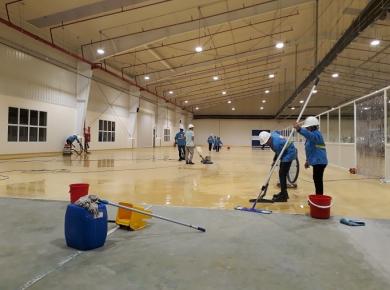
For multi-level houses or properties with extensive glass areas, work is usually divided by floor or section to maintain cleanliness throughout the process.
- Site inspection: assess area size, layout, materials, and dirt level.
- Work zoning: separate dry areas, wet areas, glass zones, and staircases.
- Rough cleaning: remove debris, vacuum dust from corners and high surfaces.
- Stain removal: treat paint, adhesive, cement, and labels.
- Detail cleaning: polish glass, clean floors, fixtures, and surfaces.
- Final inspection: check for streaks, residue, and missed spots.
What affects the cost of post-construction cleaning?
Pricing should not be based solely on floor area. The actual cost depends on multiple factors such as dirt intensity, number of glass surfaces, adhesive and paint residues, number of floors, and desired cleanliness level.
A reliable quotation clearly defines scope, included tasks, and possible additional work. This helps clients understand what they are paying for rather than relying on a single fixed number.
| Factor | Impact on cost | Notes |
|---|---|---|
| Area and number of floors | Increases workload and movement time | Multi-level houses require zoning |
| Dirt intensity | More manual effort required | Old stains are harder to remove |
| Glass and window quantity | Longer detailing time | Multiple surfaces increase complexity |
| Interior condition | Slower work due to protection needs | Installed furniture requires care |
| Purpose after cleaning | Affects final cleaning standard | Move-in vs. handover expectations differ |
How does a professional team handle construction stains?
The key difference lies in identifying stain types and applying the correct method for each surface. Aggressive scrubbing may remove dirt but can damage finishes.
Experienced teams typically test on a small area first, then proceed with full cleaning to ensure surface safety.
Paint, adhesive, and cement residues
These are common on glass, edges, and floors. Incorrect handling can leave scratches or dull marks.
- Paint stains: softened and removed layer by layer
- Silicone residue: edge removal followed by surface cleaning
- Cement marks: spot treatment without spreading
- Labels and glue: gentle peeling and residue cleaning
Glass, grout, and sanitary fixtures
These areas are highly visible and require detailed finishing for a clean appearance.
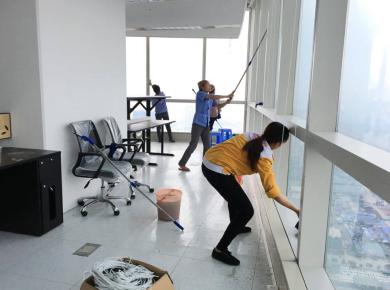
- Glass and mirrors: double-pass cleaning to remove streaks
- Grout lines: surface cleaning for a uniform look
- Sanitary fixtures: removal of residue and water stains
- Metal fittings: polishing to remove fingerprints and marks
Why hire a professional service instead of cleaning yourself?
DIY cleaning may work for light dirt, but post-construction cleaning involves stubborn residues and delicate surfaces. Professional services reduce risks and ensure more consistent results.
The value lies in correct sequencing and surface-specific techniques. This minimizes trial and error while achieving a cleaner overall finish.
- Reduced risk of surface damage
- Time-saving and efficient
- More consistent cleanliness
- Easier final inspection
Service coverage in Ho Chi Minh City
Post-construction cleaning demand in Ho Chi Minh City is common for townhouses, newly handed-over apartments, shophouses, and small offices. Properties located along major roads are generally easier to access for scheduling and inspection.
Service areas typically include main routes such as Vo Van Kiet, Pham Van Dong, Nguyen Van Linh, Mai Chi Tho, Hanoi Highway, and Truong Chinh. Nearby districts include Thu Duc, Binh Thanh, Go Vap, District 7, Tan Phu, and Binh Tan.
Frequently Asked Questions (FAQ)
When is the best time to schedule cleaning?
After all major construction work is completed and no further heavy work is expected.
Can cleaning be done after furniture installation?
Yes, but it requires more careful handling to avoid damaging installed items.
Can all stains be completely removed?
Most can be significantly improved, depending on surface condition and how long the stains have been present.
Is electricity and water required?
Yes, both are necessary for efficient cleaning and proper use of equipment.
Can I move in immediately after cleaning?
This depends on drying conditions and whether additional work is still ongoing.
Conclusion
Post-construction cleaning is the final step that prepares a property for move-in, rental, or handover. The key is not just cleaning more, but cleaning correctly—identifying stain types, using appropriate methods, and following the right sequence. In Ho Chi Minh City, Phuong Gia Foundation provides structured cleaning services designed to protect newly finished surfaces while ensuring a clean and ready-to-use space.