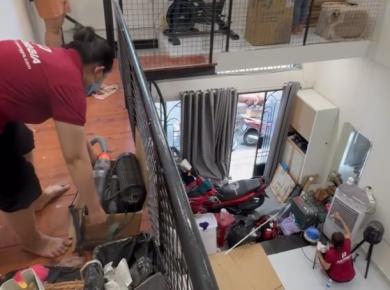


After-hours office cleaning is a practical option for businesses that need to keep their workspace clean without disrupting employees, clients, meetings, or daily operations. Instead of cleaning while the office is still busy, the work is scheduled after business hours, in the evening, on weekends, or during non-working days.
To make the cleaning session smooth, safe, and free from unnecessary issues the next morning, businesses should prepare the workspace, assign a person in charge, identify priority areas, confirm building access rules, check electricity and water availability, arrange elevator access, secure important assets, and set clear inspection criteria.
Quick answer: Before scheduling after-hours office cleaning, businesses should identify priority cleaning areas, secure important documents, inform building security or management, appoint a person for handover, prepare electricity and water access, confirm the cleaning schedule, and inspect the workspace after completion.
What is after-hours office cleaning?
After-hours office cleaning refers to cleaning, tidying, and maintaining office areas outside regular working hours. This is usually done in the evening, after employees have left, during weekends, or on non-working days, depending on each company’s operating schedule.
The work may include wiping desks, vacuuming, mopping floors, cleaning meeting rooms, pantries, restrooms, reception areas, walkways, carpets, office chairs, glass partitions, and high-touch surfaces such as door handles, light switches, handrails, and printer areas.
The key point is not only that the cleaning happens after work, but also that it must be properly organized. When planned well, the office can be cleaned more thoroughly without causing noise, interrupting employees, or interfering with ongoing business activities.
When should businesses choose after-hours office cleaning?
Businesses should consider after-hours cleaning when cleaning during office hours may cause inconvenience, affect the company’s image, or reduce employee productivity.
- The office has many employees, workstations, and shared areas that are difficult to clean during working hours.
- The office frequently welcomes clients, hosts meetings, or has a reception area that must remain presentable.
- The business needs periodic deep cleaning on a weekly, monthly, or seasonal basis.
- The company is preparing to welcome clients, partners, auditors, or internal event guests.
- The office requires carpet cleaning, chair cleaning, floor scrubbing, glass cleaning, or machine-supported cleaning tasks.
- The office has recently been renovated, relocated, or fitted with new furniture.
What should businesses prepare before after-hours cleaning?
Preparation plays a major role in the quality of the cleaning session. A clear handover helps the cleaning team work faster, ask fewer questions, and avoid missing important areas.
Identify priority cleaning areas
Before cleaning begins, businesses should list the areas that need to be cleaned according to priority. Common priority areas include open workspaces, meeting rooms, executive rooms, pantries, restrooms, reception areas, corridors, staircases, printer areas, carpets, and office chairs.
If the office is large or divided into multiple departments, it is important to mark which areas must be completed during the session and which areas can be handled later. This prevents the cleaning team from spending too much time on less important areas while meeting rooms or reception areas remain unfinished.
Organize important documents and assets
Before after-hours office cleaning, internal staff should clear their desks and secure files, confidential documents, company seals, contracts, personal devices, cash, fragile items, and other valuable assets. This is a small step, but it is often overlooked.
For departments such as accounting, human resources, sales, or legal, document protection should be handled even more carefully. Businesses should clearly define which items may be moved, which items must not be touched, which cabinets should remain closed, and which areas require confirmation from the person in charge before cleaning.
Assign a person for handover and inspection
Businesses should appoint one responsible person to coordinate with the cleaning team. This person should understand the areas to be cleaned, expected standards, completion time, building rules, and how to handle unexpected issues.
In practice, many after-hours cleaning sessions take longer not because the workload is too heavy, but because no one has the authority to confirm decisions. For example, the cleaning team may not know whether they are allowed to enter a large meeting room, move chairs, or clean the pantry last. Having a clear person in charge makes the process much smoother.
Confirm the exact cleaning schedule
Businesses should agree in advance on the start time, end time, cleaning sequence, and handover time. If the office will be used early the next morning, extra time should be allowed for carpets, chairs, floors, or damp areas to dry properly.
For office carpets, businesses should plan regular cleaning instead of waiting until stains, odor, or dust buildup become obvious. A proactive carpet cleaning schedule helps reduce unpleasant smells, control accumulated dust, and avoid urgent cleaning right before important events.
Check building access rules
If the office is located in a commercial building, office tower, or shopping complex, businesses should notify building security or management in advance. Each building may have its own rules regarding staff access, identification documents, service elevators, parking areas, working hours, and noise limits.
Information that should be prepared includes the cleaning staff list, contact number of the person in charge, cleaning time, areas to be cleaned, equipment brought into the building, elevator access, and designated storage or staging areas for cleaning tools.
Ensure access to electricity, water, and movement paths
Some tasks such as industrial vacuuming, carpet extraction, floor scrubbing, or post-renovation cleaning require machines. Businesses should check power outlets, water sources, machine placement areas, equipment movement paths, and service elevator access in advance.
If the flooring is easy to scratch, corridors are narrow, or the office has many glass partitions, the cleaning team should be informed beforehand so they can prepare suitable protective measures and move equipment safely.
Agree on inspection criteria
Inspection should not be based only on a quick visual check. Businesses should set specific criteria for each area: desks should be dust-free, floors should have no visible stains, restrooms should have no unpleasant odor, carpets should be free from visible debris, chairs should not remain excessively damp, glass should not be streaky, trash bins should be emptied, and items should be returned to the correct positions.
If any area does not meet expectations, the person in charge should record it immediately during inspection so the cleaning team can correct it on the spot. It is better not to wait until the next morning to report issues, as this makes it harder to identify the cause and may require another cleaning arrangement.
After-hours office cleaning checklist for businesses
The following table can be used as a quick checklist for office admins, HR teams, or facility managers before handing over the workspace for cleaning.
| Area / Item | Preparation Required | Person in Charge | Status |
|---|---|---|---|
| Open workspace | Clear desks, secure documents, mark items that must not be moved | Office admin / department head | Pending / Completed |
| Meeting rooms | Remove meeting documents, check screens, cables, and presentation equipment | Admin team | Pending / Completed |
| Pantry | Remove personal food, check sinks, refrigerators, and trash bins | Admin / receptionist | Pending / Completed |
| Restrooms | Check water supply, paper, soap, odor issues, and areas requiring deeper cleaning | Admin team | Pending / Completed |
| Carpets and office chairs | Identify areas to be cleaned, drying time, and movement paths after cleaning | Office manager | Pending / Completed |
| Reception and corridors | Inform security, check elevator access, and prepare tool staging areas | Security / building management | Pending / Completed |
| Electricity, water, and locks | Check power outlets, water access, keys, access cards, and alarm systems | Admin / technical team | Pending / Completed |
| Final inspection | Inspect each area, record items to be corrected, and confirm completion | Assigned person | Pending / Completed |
Common mistakes in after-hours office cleaning
Although evening office cleaning helps reduce disruption during working hours, businesses may still face problems if preparation is rushed. Common mistakes include:
- Failing to secure documents, contracts, internal files, or personal belongings.
- Not informing building security or management in advance.
- Not sending the cleaning staff list to the security team.
- Not clarifying which areas should be cleaned and which areas are restricted.
- Not assigning a person for handover, causing the cleaning team to wait for confirmation.
- Not checking drying time for carpets, chairs, or floors.
- Scheduling cleaning too close to an event, important meeting, or the next working day.
- Not inspecting the workspace immediately after completion.
For moisture-related tasks such as carpet cleaning, businesses should discuss drying time, ventilation support, and priority areas in advance. If the cleaning is done in the evening, the process should be planned carefully so employees can comfortably use the workspace the next morning.
Is after-hours cleaning suitable for every office?
After-hours cleaning is suitable for many office types, but its necessity depends on office size, layout, and operating schedule.
For small offices, after-hours cleaning may only be needed for deep cleaning, office relocation, post-renovation cleanup, or preparation before client visits. The workload is usually manageable and easy to supervise.
For offices with multiple departments, after-hours cleaning should be supported by a clear area map and assigned contact person. Without proper zoning, the cleaning team may miss less frequently used rooms or clean areas in the wrong order.
For offices with many carpets, fabric chairs, curtains, or glass partitions, after-hours cleaning is often more practical because these tasks require equipment, treatment time, and drying time. Cleaning during office hours may cause blocked walkways, damp odors, or noise.
For offices inside commercial buildings, the most important factor is access control. Businesses should confirm elevator use, permitted working hours, tool storage areas, and building security requirements before the cleaning team arrives.
For offices that still operate on weekends, businesses should choose the least busy time, divide the cleaning by area, and avoid cleaning the entire office at once.
When should businesses hire a specialized cleaning team?
Businesses should consider hiring a specialized cleaning team when the workload is large, specific equipment is required, or the cleaning must be completed within a limited time. Common examples include full office deep cleaning, large-area carpet cleaning, office chair cleaning, floor scrubbing, glass cleaning, post-renovation cleaning, and pre-event cleaning.
It is worth noting that after-hours office cleaning requires more than cleaning staff. It also requires proper work organization. An experienced team will know how to divide areas, prioritize items that may affect the next working day, control cleaning chemicals, reduce noise, and hand over the workspace neatly.
If the business is unsure whether to clean by shift, by week, by month, or by specific service item, it should first review the office’s actual cleaning needs, work schedule, building rules, and usage frequency before choosing the most suitable approach.
Inspection criteria after after-hours office cleaning
After the cleaning team completes the work, the person in charge should inspect each area instead of only looking at the overall appearance. The clearer the inspection process, the easier it is for the business to evaluate cleaning quality and avoid rework the next morning.
- Work areas: desks are dust-free, chairs are returned neatly, and trash bins are emptied.
- Meeting rooms: tables, chairs, screens, floors, and glass surfaces are clean, with no visible debris.
- Pantry: sinks, counters, cabinets, floors, and trash areas have no unpleasant odor.
- Restrooms: floors are dry, sinks are clean, mirrors are streak-free, and paper and soap are checked.
- Carpets and chairs: no obvious debris, no excessive dampness, and no strong unpleasant odor.
- Corridors and reception areas: floors are clean, not slippery, and free from tools, wires, or obstacles.
In addition, businesses should recheck doors, lights, air conditioning, electrical equipment, locks, access cards, and alarm systems if applicable. This final step is especially important when cleaning is carried out after hours.
Frequently asked questions about after-hours office cleaning
Does after-hours office cleaning create noise?
There may be some noise from vacuum cleaners, floor scrubbers, or carpet cleaning machines. However, because the work takes place after office hours, the impact on employees is usually much lower. If the office is located in a commercial building, businesses should inform building management in advance to avoid violating noise regulations.
Does someone need to stay and supervise?
It is recommended to have a person in charge for handover and final inspection. This person does not need to monitor every cleaning step, but should be present to open the office, confirm cleaning areas, handle unexpected issues, and check the workspace after completion.
Can carpets and office chairs dry in time after evening cleaning?
This depends on the material, ventilation, cleaning method, and cleaning time. If the office needs to be used early the next morning, businesses should schedule the work early enough and discuss drying support options in advance.
How far in advance should a business book after-hours cleaning?
For small tasks, a few days may be enough. For full office cleaning, large-area carpet cleaning, post-renovation cleaning, or offices with strict building regulations, businesses should schedule earlier to allow enough time for site inspection, security notification, and staff arrangement.
Is after-hours office cleaning more expensive than cleaning during business hours?
The cost may vary depending on the time slot, office area, number of staff required, cleaning tasks, and completion deadline. Businesses should provide clear information about the office layout, preferred schedule, and areas to be cleaned to receive a more accurate quotation.
Conclusion
After-hours office cleaning is a suitable choice for businesses that need to maintain a clean workplace without interrupting daily operations. To ensure an effective cleaning session, businesses should prepare priority areas, secure important assets, assign a person in charge, confirm the schedule, review access rules, prepare electricity and water access, clear movement paths, and set inspection criteria.
When everything is handed over clearly, the cleaning team can work more efficiently, the office becomes cleaner, and the business can start the next working day with greater confidence.