


A home with young children does not need to smell like floor cleaner or be disinfected constantly. What matters more is cleaning the right areas at the right time without leaving dirt, standing water, or chemical residue on surfaces that children frequently touch.
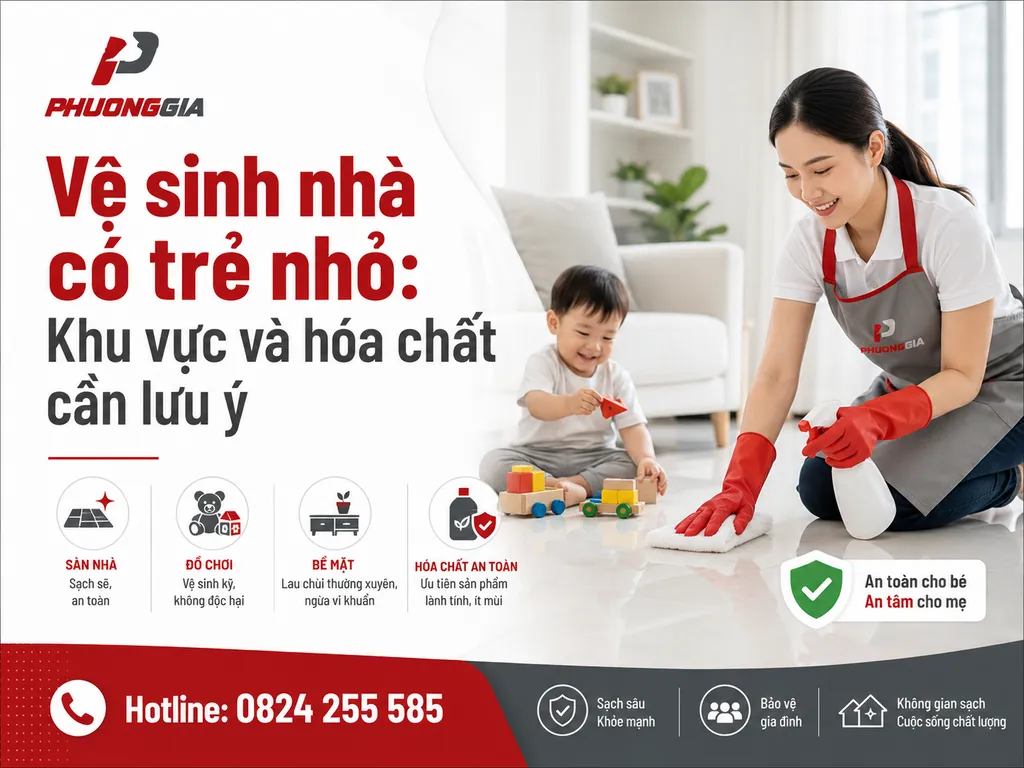
Babies and toddlers who crawl, learn to walk, or regularly put their hands in their mouths have close contact with floors, rugs, toys, low tables, and door handles. For this reason, cleaning a home with young children should focus on removing visible dirt, maintaining good ventilation, using cleaning products at the correct concentration, and allowing surfaces to dry completely before children return.
Quick answer: Remove dust and visible dirt first, disinfect only when necessary, never mix cleaning chemicals, follow product-label instructions, and store all cleaning products where children cannot reach them.
- Prioritize floors, play areas, toys, and frequently touched surfaces.
- Clean from less contaminated areas to dirtier areas and from top to bottom.
- Do not use one cleaning product on every material in the home.
- Keep children away from surfaces that are still wet or have a strong chemical odor.
Why Does Cleaning a Home with Young Children Require Extra Care?
Young children interact with their surroundings differently from adults. Adults mainly touch tables, chairs, handles, and work surfaces. Children may crawl across the floor, sit near walls, pick up objects from under furniture, and touch their faces or mouths immediately afterward.
Fine dust, hair, food crumbs, soil, and other debris often collect close to the floor. A home may look clean at first glance while dust remains along wall edges, under beds, between cabinets, and inside play rugs.
Using more cleaning products does not automatically make a home safer. Overconcentrated solutions, direct spraying on toys, and repeated use of strongly scented cleaners can leave surfaces wet for longer and increase the chance of children coming into contact with residue.
A practical cleaning schedule should reflect the child’s age, the size of the home, local dust levels, household traffic, ventilation, and whether pets live indoors. High-contact areas may require daily attention, while less-used spaces can be cleaned weekly or as needed.
Areas That Should Be Cleaned Regularly
Instead of attempting to deep-clean the entire home every day, parents should focus on places where children crawl, play, eat, sleep, and frequently touch surfaces. The following schedule is a general guide and should be adjusted according to actual use.
| Area | Suggested Frequency | Main Cleaning Method |
|---|---|---|
| Floors and play rugs | Daily or whenever dirt and crumbs appear | Vacuum first, then damp-mop and allow to dry |
| Frequently used toys | Weekly and whenever visibly dirty | Clean according to the material |
| Handles, switches, and low tables | Daily or every other day | Wipe with a clean cloth without leaving excess liquid |
| Bed sheets and pillowcases | Weekly or immediately after spills | Wash and dry completely |
| Eating areas | After every meal | Remove food, wipe clean, and dry |
| Bathrooms | Based on use | Use separate tools and keep the floor dry |
Floors and Rugs
Floors deserve particular attention in homes with crawling babies or toddlers. Before mopping, remove hair, sand, dust, and food crumbs with a vacuum or dry cleaning tool. Mopping a dusty floor immediately can spread debris across the room and leave dirty streaks behind.
Do not make the cleaning solution stronger than the manufacturer recommends. Excess product may cause the floor to dry slowly, feel sticky, or become slippery. For rugs, vacuum the edges, underside, and areas next to walls, where dust often accumulates unnoticed.
Choose a cleaning method that suits the flooring material. Wood, laminate, natural stone, tile, and vinyl may require different products and moisture levels. Using too much water on moisture-sensitive flooring can damage the surface or allow dampness to remain in seams.
Play Areas and Toys
Toys should be separated by material before cleaning. Hard plastic toys may be wiped or washed when permitted by the manufacturer. Electronic toys should be cleaned with a lightly dampened cloth, taking care to prevent moisture from entering battery compartments or electrical openings.
Soft toys should be checked for washing instructions. After washing, they must be dried completely before being returned to the child. Moisture trapped inside fabric or stuffing can create unpleasant odors and make the toy difficult to keep clean.
Avoid spraying cleaning chemicals over a large group of toys. For objects that children regularly place in their mouths, choose a simple and controlled cleaning method. Rinse the item afterward whenever the product label requires it.
Bedrooms, Beds, and Mattresses
Bedrooms may appear less dirty than kitchens or play areas, but they often collect fabric fibers, hair, and dust under furniture. Sheets, pillowcases, and blankets should be washed whenever they become soiled with milk, food, sweat, urine, or other contaminants.
Mattresses should generally be vacuumed and kept dry rather than saturated with water or cleaning solution. Pay particular attention to seams, edges, and the areas where the mattress meets the bed frame, as these locations can retain dust.
Spaces under beds, beside cribs, behind curtains, and around storage units should also be checked regularly. Small objects in these areas may create both hygiene and choking risks.
Door Handles, Light Switches, and Low Surfaces
Handles, switches, low shelves, table edges, and bed rails are touched frequently but are often overlooked during routine cleaning. A clean cloth with a controlled amount of moisture is usually easier to manage than spraying liquid directly onto the surface.
Take extra care around electrical switches and devices. Do not allow water or cleaning solution to enter openings. After wiping a low table or cabinet edge, check the surface by hand to confirm that it is dry and does not feel sticky or greasy.
Bathrooms
Bathrooms should have separate cloths, brushes, gloves, and other cleaning tools. A cloth used on the toilet, drain, or bathroom floor should never be used in a bedroom, kitchen, or eating area.
After cleaning, rinse surfaces when required, dry the floor, and store all tools immediately. Buckets containing water or diluted cleaning solution should never be left in bathrooms, hallways, or balconies where children can reach them.
Eating Areas
High-chair trays, tables, and the floor surrounding a child’s seat should be cleaned after every meal. Remove leftover food first, then wipe the surface with a clean cloth.
For surfaces that come into direct contact with food, read the product label carefully. Some cleaning products must be rinsed or wiped again with clean water before the surface can be used safely.
Cleaning Chemicals That Require Special Attention
Cleaning products should be selected according to their purpose and the material being cleaned. Fragrance, foam, and immediate whitening effects do not reliably indicate whether a product is suitable for a household with young children.
Products described as natural, green, or plant-based should not automatically be considered harmless. Any cleaning product can cause problems if it is misused, mixed with another substance, applied to an unsuitable surface, or stored within a child’s reach.
Strongly Scented or Highly Concentrated Products
A strong smell does not mean that a product cleans more effectively. In small or poorly ventilated rooms, fragrances and chemical vapors may remain in the air for longer periods.
Open doors and windows when possible, use appropriate ventilation, and keep children away from the area during cleaning. Products intended for toilets, heavy grease, construction residue, or industrial surfaces should not be used on toys, eating surfaces, or floors where children regularly crawl.
Spray Products
Spray bottles can disperse droplets beyond the intended cleaning area. Do not spray while children are nearby, and never direct the nozzle toward food, bottles, toys, bedding, or personal items.
When the product instructions allow it, apply a small amount to a cloth before wiping the surface. This approach may provide better control and reduce the amount of solution released into the surrounding area.
Unlabeled Cleaning Chemicals
Do not use products that lack clear information about their purpose, dilution instructions, safety warnings, or manufacturer. Chemicals transferred into unmarked containers can easily be mistaken for another product.
Never place cleaning liquids in water bottles, milk bottles, juice containers, or food jars. Even when adults know what the container holds, children or other household members may mistake it for something safe to drink.
The Danger of Mixing Cleaning Products
Never mix chlorine bleach with vinegar, toilet cleaner, acidic products, ammonia, or other household chemicals. Combining products can release dangerous gases or trigger harmful chemical reactions, even when each product is safe when used separately and correctly.
Always follow the dilution ratio printed on the label. Increasing the concentration without guidance may damage surfaces, create stronger fumes, and leave more residue without delivering a meaningful cleaning benefit.
How to Choose Suitable Cleaning Products
A suitable cleaning product has a clear purpose, is compatible with the intended material, and provides enough information for the user to control the amount and method of application. No single solution is appropriate for floors, mattresses, toys, kitchens, and bathrooms.
- Choose products with clear labels, instructions, and manufacturer information.
- Check which surfaces the product is designed to clean.
- Follow the stated dilution ratio and safety warnings.
- Do not use products with damaged containers, missing caps, or expired dates.
- Consider low-fragrance options in homes with limited ventilation.
- Check whether the surface must be rinsed after use.
- Confirm how long the product must remain on the surface before wiping.
Before using a new product on wood, natural stone, painted surfaces, coated furniture, or polished materials, test it on a small hidden area. Stop using the product if the surface loses color, develops streaks, becomes dull, or shows signs of damage.
Homemade cleaning mixtures also require caution. Every container should be labeled, and the solution should be tested on a small area before wider use. Homemade products must never be mixed with bleach or commercial cleaning chemicals.
A Safe Cleaning Routine for Homes with Young Children
A practical routine should help the person cleaning control the child’s location, the tools being used, the chemicals that are open, and the amount of time surfaces need to dry. Avoid supervising a young child while several cleaning containers and buckets are left open nearby.
- Arrange supervision: Move the child to another room or ask another adult to supervise during cleaning.
- Ventilate the area: Open doors or windows before using cleaning products.
- Remove personal items: Put away toys, food, bottles, clothes, and other belongings.
- Remove dry debris: Vacuum or collect dust, hair, sand, and food crumbs before wet cleaning.
- Clean from top to bottom: Wipe shelves, tables, and raised surfaces before cleaning the floor.
- Move from cleaner to dirtier areas: Clean bedrooms and play areas before kitchens, balconies, and bathrooms.
- Use the correct product: Follow the label and use a product designed for the material.
- Change cloths between areas: Do not use bathroom cloths in bedrooms or eating areas.
- Rinse when required: Follow label instructions for food-contact and child-contact surfaces.
- Allow surfaces to dry: Keep children away until floors, furniture, and toys are fully dry.
- Store products immediately: Close the caps, check for leaks, and return products to secure storage.
For larger cleaning sessions, divide the home into separate areas and finish one room before moving to the next. This method reduces missed tasks, prevents cross-contamination, and limits the number of open cleaning products at any one time.
Common Cleaning Mistakes Parents Make
The most common problems are not caused by owning too few cleaning products. They usually result from using too much product, choosing an unsuitable cleaner, or overlooking basic steps such as vacuuming, ventilation, rinsing, and drying.
- Disinfecting the entire home every day without a specific reason.
- Assuming that a stronger fragrance or more foam means better cleaning.
- Spraying products while children are playing nearby.
- Mixing several products to increase cleaning power.
- Using one cloth in the bedroom, kitchen, and bathroom.
- Ignoring instructions that require rinsing after use.
- Allowing children onto a floor that is still wet or slippery.
- Storing homemade solutions in drink or food containers.
- Applying disinfectant to a surface that has not been cleaned first.
Visible dirt, grease, food residue, and dust should be removed before a disinfectant is used. When disinfection is necessary, the product must remain on the surface for the contact time stated on the label. Wiping it away immediately may prevent it from working as intended.
How to Store Cleaning Chemicals Safely
Placing products on a high shelf may not be enough. Children can move chairs, climb nearby furniture, open drawers, and reach places that adults assume are inaccessible. A locked or child-resistant cabinet is a safer option.
- Keep products in their original containers.
- Do not remove labels or cover safety warnings.
- Close every cap immediately after use.
- Store cleaning products separately from food and medicine.
- Do not leave diluted solution in buckets or bowls.
- Never reuse drinking bottles for cleaning chemicals.
- Check containers regularly for leaks, damage, and expiration dates.
If a secondary bottle must be used for a diluted solution, label it clearly with the product name, dilution ratio, and preparation date. Do not use a bottle that resembles a beverage or a container that may attract a child’s attention.
Cleaning products should also be stored away from heat, direct sunlight, and incompatible chemicals. Follow any special storage requirements printed on the label.
Frequently Asked Questions About Cleaning a Home with Young Children
The following answers address common situations without encouraging unnecessary chemical use or excessive cleaning.
Should floors be disinfected every day?
Under normal household conditions, it is usually unnecessary to disinfect the entire floor every day. Focus on removing dust, food, and visible dirt. Disinfect specific areas when there is an appropriate reason, such as contamination from bodily fluids or certain illnesses, and follow the product instructions carefully.
What type of floor cleaner is suitable for a home with a baby?
Choose a clearly labeled product that is compatible with the flooring material and provides specific dilution instructions. When used correctly, it should not leave the floor sticky or slippery. Households sensitive to fragrance may prefer a low-fragrance product and stronger ventilation.
Are natural cleaning products completely safe?
No. Natural ingredients can still irritate the skin, damage materials, or react with other chemicals. Homemade and plant-based products must also be labeled, stored securely, and used only for their intended purpose.
How often should children’s toys be cleaned?
Clean toys whenever they are visibly dirty, after they fall into an unhygienic area, after a child has been ill, or when several children share them. Frequently used toys can also be checked and cleaned on a weekly schedule.
When can a child return to a recently cleaned area?
A child should return only after the surface is dry, all tools and chemicals have been removed, and the room has been ventilated. Follow any waiting period or rinsing requirement stated on the product label.
Can hot water be used to dilute every cleaning product?
No. The water temperature must follow the instructions for the specific product. Hot water can affect performance, increase vapors, or damage the material being cleaned.
Is disinfecting the same as cleaning?
No. Cleaning removes dirt, dust, grease, and other material from a surface. Disinfecting uses an appropriate product to reduce or destroy certain microorganisms. A visibly dirty surface should generally be cleaned before it is disinfected.
Conclusion
Cleaning a home with young children begins with understanding which surfaces children touch most often. Floors, rugs, toys, low tables, bedrooms, and eating areas should receive priority, while cleaning chemicals should be used only for their intended purpose and at the correct concentration.
A child-friendly home does not need to smell strongly of cleaning products. It should have controlled dust levels, dry and non-slippery surfaces, good ventilation, properly maintained cleaning tools, and chemicals stored securely outside a child’s reach.
Consistent, targeted cleaning is usually more practical than using large amounts of disinfectant. Removing visible dirt, preventing cross-contamination, and allowing surfaces to dry can make everyday cleaning both safer and easier to manage.