

Renting a crane is often viewed as a matter of equipment capacity and rental price per shift, but the real factor that protects a project from financial loss lies in crane rental insurance. A single lifting incident can damage valuable goods, cause workplace accidents, delay project timelines, and even trigger legal liability. With years of experience in heavy lifting services for factories, logistics hubs, and industrial projects, Phương Gia Foundation highlights the key points you must know about insurance coverage, liability, and how to minimize risks when renting a mobile crane or crawler crane.
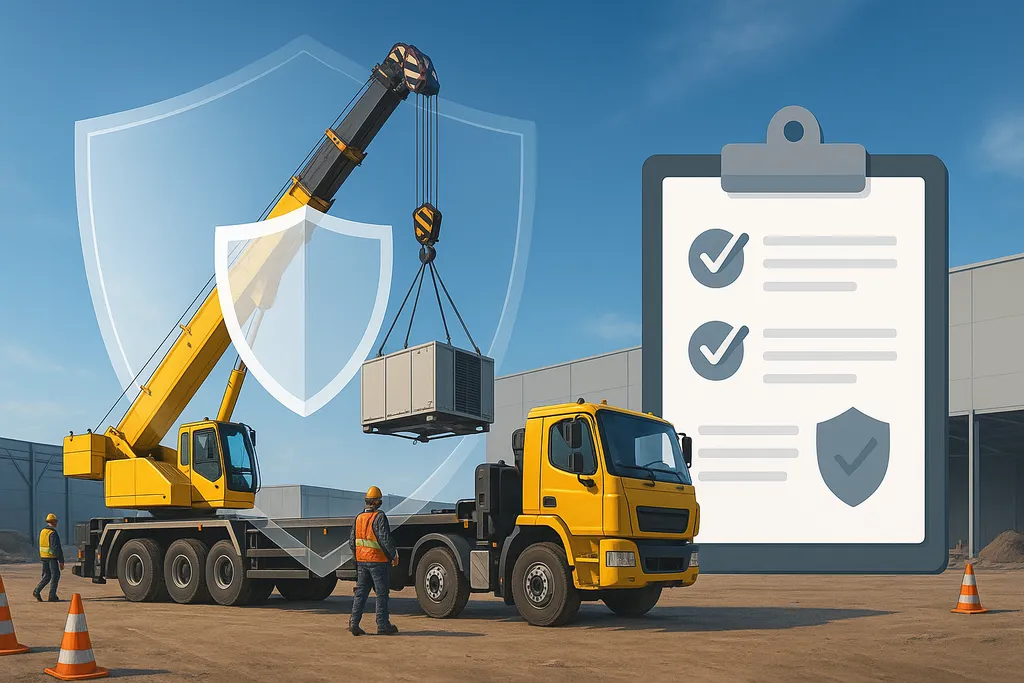
What is third-party liability insurance and why is it essential in crane rental?
Whenever a crane is brought on site, there is a risk of causing damage to surrounding property or people. Third-party liability insurance protects the client from having to pay compensation out of pocket if the crane accidentally damages nearby buildings, machinery, vehicles, or injures workers unrelated to the lifting team. In short, it is the minimum financial protection required when operating a construction crane in areas with high-value assets or crowds.
- Covers accidental damage to adjacent structures, warehouse roofs, industrial pipelines, parked trucks, etc.
- Mandatory in many industrial parks, seaports, and logistics zones before a crane is allowed to enter the site.
- Without proper insurance, all claims may legally fall on the party operating the lift at the time of the incident.
Real-world cases show that most accidents happen not while lifting vertically, but when rotating the load in tight spaces. A minor swing can scratch wall panels, dent steel beams, or break skylights. Without proper crane rental insurance, the loss can exceed the crane rental fee many times over.
Types of insurance commonly used in crane rental services
Not all insurance policies are the same. To ensure safe crane rental operations, businesses should understand the most common insurance types and avoid misunderstandings like “the crane is insured, so everything is covered.”
- Third-party liability insurance: Covers damage to people or property outside the lifting team.
- Operator accident insurance: Covers medical and injury costs for crane operators, riggers, and signalmen.
- Equipment damage insurance: Covers repair costs if the crane boom breaks, hydraulic cylinder fails, or lifting gear is damaged in an accident.
- Cargo/lifted goods insurance: Protects the item being lifted (machines, molds, chillers, steel structures). Many clients mistakenly assume the crane’s insurance covers this — it usually doesn’t unless specified.
- Delay or project interruption insurance: Required in EPC, FDI factory, or cold-storage projects where every hour of delay is costly. Not all providers offer this, so always confirm first.
Who is liable if an accident occurs during crane rental?
One of the most common questions in crane rental services is: “If the load is dropped, who pays?” Liability depends on who is in charge of lifting operations, and what was agreed in the work order.
- Service provider liable: When the crane company handles technical planning, load assessment, rigging method, and directs the lift.
- Client liable: When the client chooses rigging method, gives unsafe commands, or insists on lifting outside safe radius.
- Restricted zones (ports, chemical plants, logistics cold rooms): If the client hides information about the load or surrounding risks, insurance may refuse coverage and liability shifts fully to the client.
Key documents to verify before signing a crane rental contract
To avoid financial disputes, always request documents before finalizing a crane rental agreement — not after an accident happens.
- Maximum compensation limit — Does it match the value of the item being lifted?
- Valid insurance period — Check expiry date.
- Type of activities covered — Standard cargo lifting vs. precision installation in tight spaces.
- Insurance provider & policy number — A professional company will provide this transparently.
- Photo record of load condition before lifting — Reduces dispute risk dramatically.
Required safety procedures before a crane enters the jobsite
Insurance only compensates after an accident — prevention protects the project. Professional crane service providers submit a safety package including:
- Site inspection record (ground stability, lifting radius, underground utilities)
- Lifting method statement (load weight, boom angle, rigging setup)
- Crane inspection certificate and maintenance log
- List of certified operators, riggers, and signalmen
- Completion and handover report after lifting
FAQ – Crane Rental Insurance
Can I rent a crane without insurance?
Yes, but the risk is extremely high. If the crane damages the load or nearby property, the client may be fully responsible for all repair costs.
Does the crane’s insurance automatically cover my cargo?
No. Standard crane insurance covers the crane itself, not the customer’s goods. Ask specifically for cargo insurance if your asset is valuable.
If my machine gets scratched, is it covered?
Depends on the policy. Some cover only total loss or major damage, not cosmetic scratches. Always document the original condition of the cargo.
Should the customer buy extra insurance?
Yes, especially when lifting machinery, chillers, steel frames, or multi-million-dollar equipment. Temporary cargo insurance is inexpensive compared to replacement costs.
Does crane size matter for insurance requirements?
Not really. A 10-ton crane can cause as much legal and financial damage as a 100-ton crane in tight spaces. What matters is the type of load, lifting environment, and responsibility agreement.
Conclusion & Recommendation
Crane rental insurance is not a formality — it protects your schedule, assets, and legal position. Always clarify insurance scope, liability, and compensation limits, and request site inspection plus documented lifting plans. If you are preparing to lift high-value machinery, install steel structures, or load/unload containers in tight conditions: Need crane rental in Ho Chi Minh City and nearby provinces? Contact Phương Gia Foundation – Hotline: 0948952024 or 0824 255 5855.