

How can indoor PM2.5 be reduced and HEPA vacuuming done correctly?
In homes across Ho Chi Minh City, PM2.5 often enters through gaps, balconies, and ventilation, while also being generated by cooking, fabric dust, and post-renovation residue. Using a vacuum equipped with a High-Efficiency Particulate Air (HEPA) filter helps capture fine particles embedded in mattresses, curtains, and carpets when performed in the correct order: prepare the space, vacuum from top to bottom, clean edges and crevices, then finish with damp wiping.
- Block entry points: gaps and airflow paths.
- Prepare the room to minimize disturbance.
- Vacuum top to bottom systematically.
- Finish with damp microfiber wiping.

In Ho Chi Minh City, fine particles can accumulate indoors even when surfaces appear visually clean. These microscopic particles are easily re-suspended when fans operate or when dry sweeping is performed. The health risks of indoor PM2.5 in Ho Chi Minh City homes are linked to repeated daily exposure rather than visible dust. Phuong Gia Foundation commonly addresses situations where visible dust has been removed, yet occupants still experience a heavy or uncomfortable indoor environment. In such cases, structured HEPA vacuuming combined with damp wiping produces more stable results.
Where does indoor PM2.5 originate and where does it accumulate?
PM2.5 can enter from outdoor sources and can also be generated indoors. Without a structured cleaning approach, these particles settle into fabrics and hidden crevices, then return to the air during daily activities. Effective reduction requires both limiting entry points and targeting accumulation zones.
Common sources include outdoor air infiltration through windows and balconies, cooking emissions, textile fibers from curtains and carpets, and fine construction dust. Accumulation frequently occurs on top of cabinets, window ledges, wall edges, under beds, inside fabric upholstery, and along baseboards.
- Door and window gaps allow infiltration.
- Curtains and carpets retain particles longer.
- Hidden corners are often overlooked.
- Kitchens generate intermittent fine emissions.
When should HEPA vacuuming be prioritized?
HEPA vacuuming is particularly useful when fine particles are embedded in soft materials and hard-to-reach areas. Surface wiping alone may not address particles trapped in textiles, leading to rapid reappearance of dust. The objective should be to remove embedded particles, avoid re-suspension, and stabilize results with controlled finishing steps.
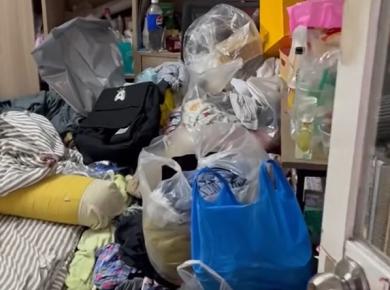
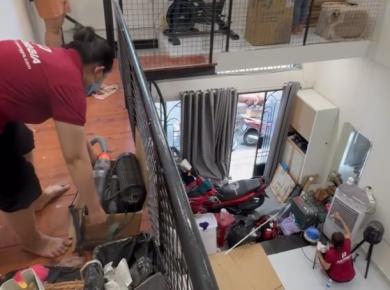
Situations that typically require deep cleaning include post-renovation occupancy, newly completed homes, residences with heavy curtain or carpet use, and properties near major traffic corridors. In post-construction scenarios, defining a structured cleaning scope helps reduce repeated effort and missed areas.
Signs that current cleaning methods are insufficient
Dust returning quickly after cleaning, visible particles in sunlight beams, or repeated cleaning without noticeable improvement may indicate improper sequencing or excessive particle disturbance. In these cases, revising the cleaning order and minimizing dust agitation are recommended.
Preparation before HEPA vacuuming
Proper preparation reduces airborne disturbance and improves efficiency. Two key principles are avoiding dust agitation and ensuring the vacuum system remains sealed during operation. Dry sweeping before vacuuming commonly disperses fine particles throughout the room.
Organizing tasks room by room and maintaining a top-to-bottom sequence prevents cross-contamination. Preparation should ensure unobstructed access to corners, baseboards, and undersides of furniture.
- Remove children and pets from the area.
- Clear small objects to access hidden zones.
- Prepare crevice and upholstery attachments.
- Check dust container or bag for airtight condition.
- Limit strong airflow during cleaning.
Seven-step HEPA vacuuming process (top to bottom)
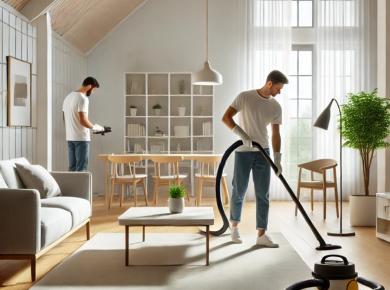
The most effective method follows a top-down and clean-to-dirty progression. Movement speed and surface contact pressure significantly affect fine particle capture. Moving too quickly or hovering above surfaces reduces efficiency. When performed correctly, fabric surfaces and concealed areas show noticeable improvement without excessive repetition.
- Close the room and turn off strong fans.
- Vacuum high surfaces such as cabinet tops and ledges.
- Vacuum curtains, sofas, and mattresses using proper attachments.
- Clean baseboards, corners, and under furniture with a crevice tool.
- Vacuum the entire floor, focusing along wall edges.
- Finish with damp microfiber wiping to stabilize particles.
- Seal the dust bag before disposal outside.
Common mistakes and prevention
Frequent errors include dusting with a dry broom before vacuuming, emptying dust containers indoors, or using blower modes that disperse particles. Another common oversight is ignoring curtains, mattresses, and wall edges. Avoid shaking filters or disposing of dust indoors; these tasks should be performed in well-ventilated areas.
Post-cleaning inspection and long-term maintenance
Inspection ensures that particles do not return quickly. If the vacuum system is not airtight or filters are clogged, fine particles may re-enter the indoor air. Simple post-cleaning checks significantly influence stability in the following days.
- Inspect ledges and baseboards after 24–48 hours.
- Replace or maintain filters as recommended.
- Use entrance mats to reduce incoming dust.
- Operate kitchen exhaust systems during cooking.
Habit-based prevention strategies
Prefer damp wiping over dry sweeping, especially in bedrooms and fabric-heavy areas. Ventilation should be timed carefully to avoid introducing outdoor particles. Homes with heavy textile use benefit from focused vacuuming schedules targeting these materials rather than floor-only cleaning.
Service coverage in Ho Chi Minh City
Support is provided for apartments, townhouses, and offices across Ho Chi Minh City, including areas along Dien Bien Phu, Vo Van Kiet, Nguyen Van Linh, Pham Van Dong, Truong Chinh, and Hanoi Highway corridors.
Common neighboring districts served include District 1, District 3, District 4, Binh Thanh, and Phu Nhuan, depending on workload and logistical conditions.
Frequently Asked Questions (FAQ)
Does a vacuum labeled “HEPA” guarantee effective PM2.5 capture?
Performance depends on both filter quality and system sealing. Air leakage reduces effectiveness even with a HEPA filter.
Should vacuuming be done before damp wiping?
Vacuum first to remove dry particles, then damp wipe to stabilize remaining fine residue.
Is it advisable to open windows during vacuuming?
If outdoor air quality is poor, opening windows may introduce additional particles. Ventilation should be controlled and timed appropriately.
What precautions apply to homes with children?
Keep children away from active cleaning areas and prioritize mattresses, curtains, and carpets where particles persist longer.
How should dust bags be handled to prevent re-dispersion?
Seal dust bags before disposal and empty containers in well-ventilated outdoor spaces.
Conclusion
The health risks of indoor PM2.5 in Ho Chi Minh City homes stem from silent accumulation and repeated re-suspension during daily activity. An effective HEPA vacuuming process requires proper preparation, top-to-bottom sequencing, thorough attention to textiles and crevices, and damp finishing to stabilize remaining particles. Consistent maintenance habits and careful filter management contribute to more stable indoor air conditions. Phuong Gia Foundation applies this structured approach to reduce repeated cleaning cycles and improve perceived cleanliness alongside measurable surface results.