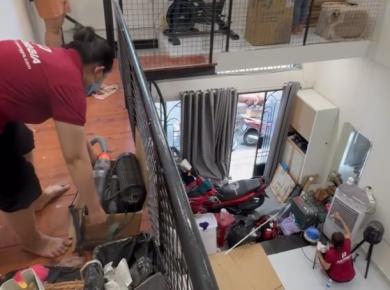


A newly built house that still has white dust after repeated mopping is a very common problem after construction or renovation. You may have cleaned the floor several times, wiped the glass, cabinets, skirting areas and corners, but once the surface dries, a powdery white layer still appears. When touched, the floor may feel dusty, rough or slightly chalky.

This does not simply mean the house is “not clean enough”. Post-construction dust usually includes cement dust, wall putty, paint dust, tile residue, grout powder, silicone residue and fine airborne dust. If cleaned the wrong way, the dust can spread into a cloudy white film, making floors look dull, glass look streaky and cabinets feel dusty again after only a short time.
The right solution is to clean in the correct order: remove dry dust first, clean from high areas to low areas, use clean cloths and fresh water frequently, treat cement, paint and glue stains separately, then check the surface again under angled light. This is the key difference between normal house cleaning and post-construction cleaning.
Why does a newly built house still have white dust after cleaning?
Cement dust and wall putty remain in small gaps
After construction, sanding, tiling, door installation, cabinet installation and interior finishing, white dust often settles deep inside tile grout lines, skirting edges, sliding door tracks, cabinet gaps, electrical sockets, door trims and hidden corners. When you wipe only the visible surface, the dust inside these small gaps remains. Once there is wind, foot traffic or door movement, the dust comes out again and makes the house look dirty.
Fine dust flies back into the air when swept dry
Many people begin by sweeping the floor strongly. This may work for large debris, but it is not suitable for fine construction dust. Fine dust is very light. When swept too hard, it rises into the air, sticks to glass, shelves, cabinets, ceilings and lights, then falls back onto the floor. That is why a house can look clean in the morning but have a thin white layer again by the afternoon.
Using too much water spreads dust into a white film
Another common mistake is using too much water or an overly wet mop. When cement dust, wall putty and paint dust meet water, they may spread across the surface instead of disappearing. While the floor is wet, it may look clean. Once dry, it can leave a cloudy white film, especially on glossy tiles, glass, stone surfaces and dark-colored floors.
Using the wrong chemicals can make surfaces dull or leave residue
Scented floor cleaners, strong detergents, cement removers, vinegar, acid-based cleaners or unknown chemicals can damage surfaces if used incorrectly. Some chemicals may dull glossy tiles, damage grout, discolor metal fittings, stain natural stone or affect cabinet finishes. In that case, the white mark is no longer just dust. It may be chemical residue or surface damage.
Cleaning in the wrong order makes dust fall back down
If you mop the floor first and then clean ceilings, lights, doors, glass, shelves and cabinets, dust from higher surfaces will fall back onto the floor. This is one of the main reasons a newly built house still looks dusty after repeated cleaning. The correct order is always high to low, inside to outside, dry to damp, and cleaner areas before dirtier areas.
Areas where white dust usually appears the most
Tile floors, grout lines and skirting areas
The floor collects the most dust after construction. The tile surface may look clean after mopping, but grout lines, corners and skirting areas often still contain cement dust or wall putty. When the mop passes over these areas, dust is pulled out and spreads into white streaks across the floor.
Glass, aluminum frames and sliding door tracks
Glass easily shows white dust when viewed from an angle. If glass is wiped before dry dust is removed, tiny dust particles or cement residue may create scratches or cloudy marks. Sliding door tracks also hold dust for a long time. Every time the door opens or closes, dust inside the track can fall back onto the nearby floor.
Kitchen cabinets, stone countertops and wall shelves
Kitchen cabinets, stone countertops, decorative shelves and built-in wardrobes often collect drilling dust, wood particles, silicone residue and fingerprints from workers. These surfaces should be cleaned gently with soft cloths. Avoid harsh scrubbing. For engineered wood, acrylic, laminate or melamine surfaces, using too much water may cause edge swelling, stains or surface marks.
Switches, sockets, lights and ceilings
These areas are often forgotten during cleaning. Dust around switches, sockets, recessed lights, ceiling gaps and decorative trims may continue to fall for days. When cleaning electrical areas, use a dry cloth, a slightly damp cloth that has been wrung out well, or a small vacuum nozzle. Do not spray water directly onto sockets, switches or lights.
Bathrooms and areas with silicone sealant
Bathrooms often contain different types of white marks: cement dust, grout residue, silicone residue, dried water stains, powder on textured tiles and residue on metal fittings. Each type needs a different treatment. Using one strong chemical for everything may dull faucets, stain glass, damage tiles or weaken grout.
How to remove white dust from a newly built house properly
Step 1: Vacuum dry dust first, do not mop immediately
Before using water, remove dry dust as thoroughly as possible. Focus on floors, grout lines, skirting areas, door tracks, window ledges, cabinet gaps, stair edges and areas near drilling or cutting work. If you do not have a vacuum cleaner, use a soft broom and dry microfiber cloth, but work gently to avoid sending dust back into the air.
Step 2: Clean from high areas to low areas
Start with ceilings, lights, fans, doors, glass, cabinets, shelves and countertops before cleaning the floor. This simple rule makes a big difference. If you clean in the opposite order, the floor will need to be cleaned again because dust from higher surfaces keeps falling down.
Step 3: Use the two-bucket method
Prepare one bucket of clean water and one bucket for rinsing dirty cloths or mop heads. After each wipe, rinse the cloth in the dirty-water bucket, wring it out, then dip it into the clean-water bucket. This helps prevent white dust from spreading from dirty areas to clean areas. If you use only one bucket for the whole room, the water quickly turns cloudy and spreads dust back onto the surface.
Step 4: Change cloths and water frequently
A dirty cloth is one of the main reasons a house becomes cloudy after cleaning. For a newly built house, prepare several microfiber cloths. Once the cloth turns grey-white or the water becomes cloudy, replace it immediately. Do not try to save one bucket of water or one cloth for too long, because fine dust easily returns to glass, floors and cabinets.
Step 5: Treat cement, glue and paint stains separately
Not every white mark is dust. Dried cement, silicone, water-based paint, oil-based paint, grout residue and chemical residue all require different cleaning methods. Before using any remover, test it in a hidden corner. For glass, glossy tiles, stone and coated surfaces, avoid metal scrapers or hard pads because even small scratches can become very visible under light.
Step 6: Check again with angled light and a white cloth
After cleaning, use a flashlight or angled natural light to inspect floors, glass and stone surfaces. Angled light reveals cloudy films, streaks and leftover residue more clearly. You can also wipe a small area with a dry white cloth. If the cloth still picks up white powder, dust remains either on the surface or inside nearby gaps.
How to clean white dust on different surfaces
Glossy tiles and porcelain tiles
For glossy tiles and porcelain tiles, vacuum dry dust first, then wipe with a well-wrung damp cloth. If a white film remains, clean again with fresh water in several rounds. Do not use scented floor cleaner too early. For thin cement residue, a specialized cement remover may be used, but it must be diluted correctly, tested on a small hidden area and rinsed off with clean water immediately.
Textured or anti-slip tiles
Textured tiles are harder to clean because dust sits inside the rough surface. If you only use a wet mop, the dust may simply move around instead of being removed. Combine vacuuming, a soft brush and microfiber cloths. For large areas, a floor scrubber with the right pad may work better. Avoid overly hard pads because they can scratch or discolor the surface.
Glass and aluminum frames
For glass, the first step is to remove dry dust. After that, use a suitable glass cleaner and a clean cloth. Do not scrape glass while cement dust or sand particles are still on the surface, because these particles can create scratches. Aluminum frames, door gaps and sliding tracks should be vacuumed with a small nozzle before wiping with a damp cloth.
Stone surfaces, engineered wood and kitchen cabinets
Natural stone, engineered wood, acrylic, laminate, melamine and painted surfaces should not be cleaned aggressively. Use a soft cloth, a neutral cleaner and only a small amount of water. Do not use acid, abrasive powder, steel wool or cement remover on these surfaces unless you are sure the material can tolerate it.
Bathroom fixtures and metal accessories
Faucets, shower heads, handles, hinges, floor drains and stainless-steel accessories may become dull if exposed to strong chemicals for too long. After removing dust or residue around these areas, wipe again with clean water and dry immediately with a soft cloth. Do not leave chemicals sitting on metal overnight.
Mistakes that make white dust harder to remove
Sweeping too strongly
Strong sweeping sends fine dust into the air, where it settles on other surfaces and falls back later. For post-construction dust, vacuuming is much better than dry sweeping. If sweeping is necessary, sweep gently, work in small sections and avoid creating airflow inside the room.
Mopping once with too much water
More water does not mean better cleaning. When water mixes with cement dust and wall putty, it can leave a white film after drying. The better method is to wipe with a damp cloth in several rounds, replace water frequently and finish with a clean cloth.
Using strong chemicals without knowing the material
Each surface reacts differently to chemicals. A cement remover may be suitable for some tiles, but unsafe for natural stone, metal, engineered wood or sensitive glossy finishes. Always test on a small hidden area before applying it widely.
Using scrapers or hard pads incorrectly
Scrapers, steel wool and hard pads may remove stains quickly, but they can also leave permanent scratches on glass, glossy tiles, stainless steel, stone and cabinet surfaces. Once a surface is scratched, dust settles more easily into the scratches and becomes harder to clean later.
Cleaning only the floor while ignoring walls, ceilings and gaps
The floor is only the most visible dirty area. Dust may still be sitting on door trims, ceilings, lights, walls, cabinet tops, sliding tracks and small gaps. If these areas are not cleaned, the floor will keep collecting dust no matter how many times you mop it.
When can you clean it yourself, and when should you hire a cleaning team?
You can clean it yourself if the dust is light and the area is small
You can handle the cleaning yourself if the house has only light dust, few cement stains, little paint or silicone residue, no high glass areas, no delicate stone flooring and a manageable floor area. Prepare a vacuum cleaner, microfiber cloths, a soft brush, a well-wrung mop, gloves and a neutral cleaner.
You should hire a cleaning team if there is heavy fine dust or many difficult surfaces
If the house has multiple floors, a large apartment area, high glass, textured tiles, thick cement dust or many paint and glue stains after construction, cleaning it yourself can take a lot of effort without giving an even result. A professional team will usually have better tools, suitable chemicals and a surface-specific process.
Be careful if the floor, glass or stone has already become cloudy
If a surface already shows cloudy marks, scratches, white residue or discoloration, do not continue testing random cleaning methods. First, identify whether the problem is dust, chemical residue or surface damage. One more wrong attempt can make the repair cost much higher.
What should you check before deep cleaning?
Before deciding whether to keep cleaning by yourself or call a professional team, check three things: how much dust remains inside gaps, how many cement or paint stains are still present, and whether the surface already shows cloudy marks or scratches. If the house is large, has many floors or needs to be handed over quickly, compare the cost of tools, time and labor before continuing on your own.
A simple test is to wipe three areas with a clean white cloth: the middle of the floor, the area next to the skirting board and the inside of a sliding door track. If all three areas leave clear white dust on the cloth, the house is not only dusty on the surface. Dust is still trapped in gaps, so the cleaning process needs to be done in layers instead of simply mopping with scented water.
Frequently asked questions
How many times should a newly built house be mopped before the white dust disappears?
There is no fixed number. If the process is done correctly, a lightly dusty house may improve after two or three thorough cleaning rounds. However, if dust remains in grout lines, door tracks, ceilings, cabinets and small gaps, repeated mopping will not solve the problem. The key is to vacuum dry dust first, clean from high to low and replace cloths and water frequently.
Should I use scented floor cleaner to remove white dust?
Not at the beginning. Scented floor cleaner is more suitable for daily maintenance, not for removing cement dust, wall putty or fine construction dust. If used while the floor still contains a lot of dust, it may leave a sticky, cloudy or white residue.
Can post-construction white dust affect health?
Yes, it can. Fine construction dust may irritate the eyes, nose, throat and skin, especially for children, older adults or people with respiratory problems. When cleaning, wear a mask, ventilate the space, avoid strong sweeping and do not let dust circulate inside a closed room.
Can a floor that turns cloudy after mopping be restored?
It depends on the cause. If the cloudy layer is only fine dust or cleaning residue, it can often be removed by vacuuming and wiping correctly. If the floor has been etched, scratched or damaged by chemicals, restoration will be more difficult and should be checked carefully before further cleaning.
Should I use acid to remove cement from the floor?
Do not use strong acid without proper knowledge. Some cement removers are acid-based and may work on suitable tiles, but they must be diluted correctly, tested first and rinsed thoroughly. Never use acid carelessly on natural stone, metal, engineered wood or glossy coated surfaces.
Conclusion
A newly built house that still has white dust after repeated cleaning is usually affected by cement dust, wall putty, fine dust, paint residue, silicone residue or the wrong cleaning order. To clean it properly, do not rush to mop with water. Remove dry dust first, clean from high to low, use the two-bucket method, change cloths often and treat each type of stain according to the surface.
If the dust is light and the area is small, you can clean it yourself. But if there is heavy fine dust, cloudy flooring, high glass, thick cement residue or delicate stone, wood and metal surfaces, it is safer to let an experienced team inspect and handle the work properly from the beginning. One correct cleaning process can save far more effort than repeatedly mopping a floor that still looks covered in white powder.