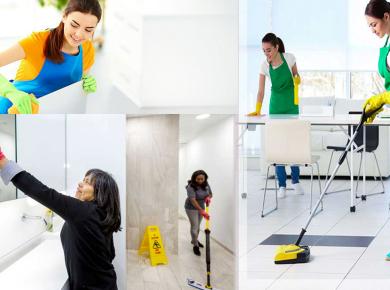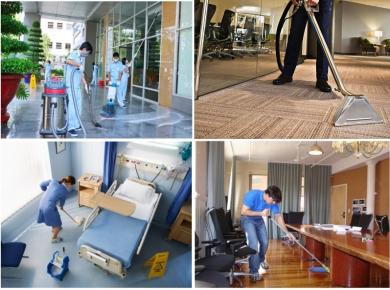


Before welcoming clients, business partners, senior candidates, or hosting an important meeting at the office, the workspace needs more careful preparation than usual. At this point, the office should not only be clean. It should also look tidy, smell fresh, feel comfortable, and avoid small careless details such as dust on the meeting table, damp carpet odor, missing toilet paper, or dirty cups left in the pantry.
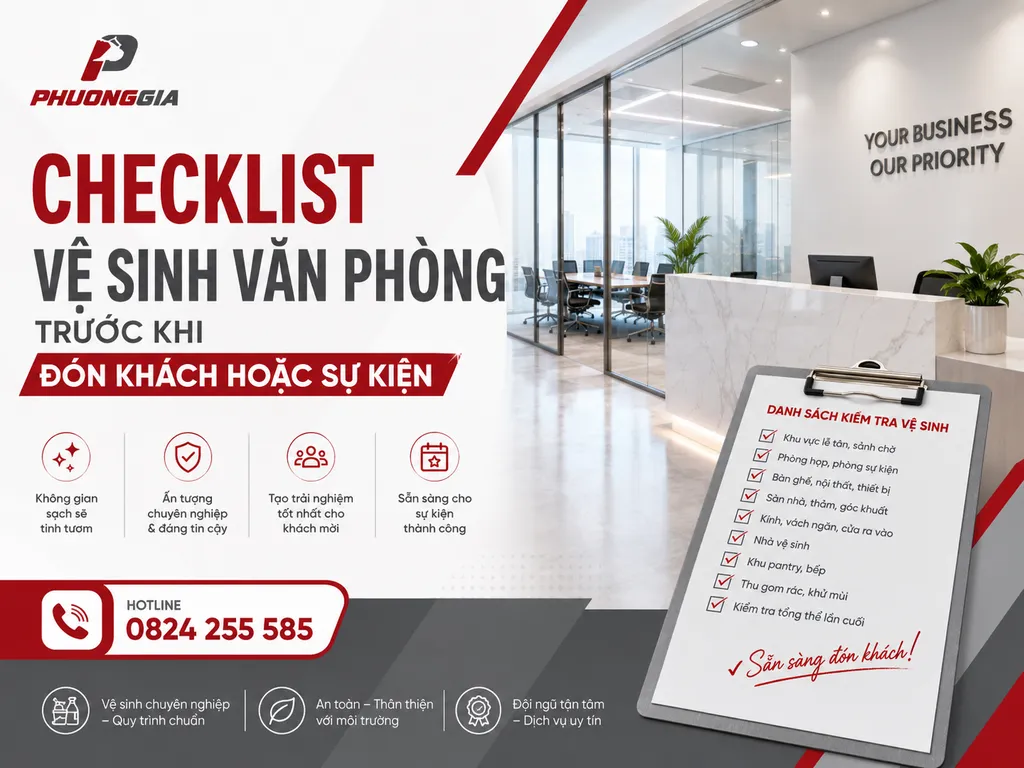
An office event cleaning checklist helps your team review each area based on the actual route guests will take: entrance, reception, waiting area, meeting room, workstations, carpets, chairs, pantry, and restrooms. This makes it easier to assign tasks, inspect the office before guests arrive, and avoid last-minute cleaning chaos.
Quick answer: Before an office event, cleaning should focus on three layers: areas guests see first, areas guests use the longest, and areas that can create discomfort, such as restrooms, pantry, carpets, chairs, and trash bins. Ideally, the office should be checked 24 hours in advance, cleaned in detail 3–4 hours before the event, and inspected again 30–60 minutes before guests arrive.
Why should the office be cleaned carefully before welcoming guests or hosting an event?
Guests often form their first impression very quickly. A tidy reception area, clean meeting room, dust-free chairs, and fresh restroom can make the business feel organized and professional. On the other hand, small issues such as an overflowing trash bin, water stains on the meeting table, or footprints on the floor can make the space feel poorly prepared.
The difference between daily office cleaning and event preparation lies in priority. Daily cleaning usually focuses on trash removal, floors, restrooms, and desks. Before an event, the team should also check highly visible and frequently touched areas such as glass doors, door handles, guest chairs, meeting tables, screens, carpets, and pantry surfaces.
If the office already follows a weekly cleaning schedule, preparing for an event becomes much easier. When basic cleanliness is maintained regularly, the team only needs to focus on detailed touch-ups, odor control, layout arrangement, and final inspection before guests arrive.
For important meetings, small seminars, senior interviews, business presentations, or signing sessions, office cleaning should be treated as part of the company’s image preparation. It is not a side task. It is the foundation that helps the entire meeting feel smoother and more professional.
Reception area and entrance cleaning checklist
The reception area and entrance are the first places guests see. This area should feel bright, open, clean, and ready. When checking it, stand from the guest’s point of view at the entrance instead of only looking at individual items.
- Clean glass doors, glass partitions, door handles, and company signage.
- Sweep, vacuum, and mop the entrance floor.
- Check the doormat and replace or clean it if it is dirty, damp, or smelly.
- Wipe the reception counter, waiting table, guest chairs, brochure rack, and display surfaces.
- Arrange brochures, guest name cards, event standees, or welcome materials neatly.
- Remove paper scraps, old cups, cartons, plastic bags, or unrelated items.
- Replace trash bags before guests arrive and do not let bins become more than half full.
- Make sure walkways are free from cables, boxes, cleaning tools, carts, or obstacles.
- Check lighting, room scent, and temperature in the guest reception area.
A common mistake is cleaning the floor but forgetting glass and door handles. These are the areas where fingerprints show most clearly. For offices with large glass doors, check from a side angle because smudges are often easier to see under angled light.
Meeting room, guest area, and workstation cleaning checklist
The meeting room is usually where guests spend the most time, so it should be clean both visually and physically. Besides cleaning, this area should also be prepared according to the purpose of the meeting: short discussion, presentation, training, signing session, or informal guest reception.
- Wipe the meeting table surface, table edges, table legs, and hand-contact areas.
- Clean chairs, armrests, backrests, and visible stains on seat cushions.
- Arrange chairs neatly and prepare the correct number of seats.
- Vacuum or mop under the meeting table, under chairs, and in room corners.
- Clean whiteboards, presentation screens, remotes, microphones, cameras, and online meeting equipment.
- Check HDMI cables, sockets, chargers, speakers, projectors, and internet connection.
- Remove old notes, used cups, food wrappers, broken pens, and unrelated documents.
- Prepare drinking water, tissues, pens, note paper, or meeting documents if needed.
- Check room odor, especially if the meeting room has been closed for a long time or uses air conditioning often.
For workstations near guest walkways, employees should clear their desks before the event. Internal documents, contracts, customer files, quotations, and personal items should be stored in drawers, cabinets, or private areas. A busy office is normal, but guests should not feel that the company is still “cleaning while receiving them.”
If preparation time is limited, prioritize what guests will definitely notice: meeting table, guest chairs, presentation screen, walkway into the room, and trash bins. These items usually have a stronger impact than trying to clean every low-traffic corner.
Carpet, office chair, and high-touch surface cleaning checklist
Carpets, chairs, and high-touch surfaces are often overlooked, but they strongly affect how clean the office feels. Guests may not notice whether the carpet is new or old, but they can easily notice dust, damp odor, or visible stains on the chairs they sit on.
- Vacuum carpets at the entrance, meeting room, guest area, and main walkways.
- Check for coffee stains, water marks, mud, or visible patches on carpets.
- Control damp carpet odor, especially in offices that use air conditioning frequently.
- Vacuum fabric chairs and wipe leather or synthetic leather chairs with suitable cleaning products.
- Clean door handles, light switches, elevator buttons, stair handrails, and chair armrests.
- Wipe shared phones, printers, keyboards, remotes, and meeting equipment.
- Check dust along table edges, chair gaps, table legs, wall corners, and under shelves.
If carpets have long-term stains or odor, last-minute vacuuming only solves the surface problem. Businesses should clean office carpets periodically to reduce damp smell, fine dust, and accumulated dirt before important guest visits.
Office chairs should be checked at least 1–2 days before the event if deep cleaning is needed. Fabric and cushioned chairs need enough drying time. If cleaned too close to the event, they may still feel damp or smell unpleasant when guests sit down.
Pantry, restroom, and support area cleaning checklist
The pantry and restroom may not be the center of the event, but they can create a poor experience if ignored. If guests stay in the office for more than 30 minutes, they may need water, coffee, handwashing, or restroom access. These areas should always be part of the checklist.
- Clean sinks, faucets, pantry countertops, and drink preparation areas.
- Remove dirty cups, food boxes, plastic bags, dry waste, and food waste.
- Wipe coffee machines, microwaves, small refrigerators, or water dispenser areas.
- Prepare drinking water, paper cups, tissues, tea, coffee, or light snacks if needed.
- Clean toilets, washbasins, mirrors, faucets, floors, and restroom door handles.
- Check toilet paper, hand soap, sanitizer, hand towels, and trash bags.
- Remove the source of bad odor first, then use mild fragrance if necessary.
- Make sure storage areas, back corridors, and emergency exits are not blocked by trash or equipment.
Avoid using strong fragrance to cover restroom or pantry odor. It is better to remove trash, clean damp surfaces, improve ventilation, and only use a light scent after the area is clean. Overly strong fragrance can make guests uncomfortable, especially in air-conditioned spaces.
For events lasting several hours, assign someone to check the pantry and restroom at different times, such as before guests arrive, after break time, and before the event ends. This small detail shows careful preparation.
Office cleaning timeline before an event
To avoid last-minute pressure, cleaning tasks should be divided into three stages: 24 hours before, 3–4 hours before, and 30–60 minutes before the event. This prevents the team from rushing all cleaning tasks right before guests arrive.
| Time | What to do | Main goal |
|---|---|---|
| 24 hours before | Inspect the whole office, handle carpets, chairs, glass, odor, and difficult stains | Leave enough time to fix major issues |
| 3–4 hours before | Mop floors, clean meeting rooms, restrooms, pantry, reception, and guest areas | Complete the main cleaning tasks |
| 30–60 minutes before | Do final inspection, replace trash bags, adjust chairs, refill water, check odor and lighting | Make sure the office is ready for guests |
For important events, do not leave carpet cleaning, chair cleaning, or large glass cleaning until the last minute. These tasks may create problems such as damp surfaces, cleaning product smell, streaky glass, or the need to redo the work.
Final inspection criteria before the event starts
The final inspection should follow the actual guest journey: entering the office, meeting the receptionist, waiting, entering the meeting room, using the pantry or restroom, and leaving the office. This is more practical than standing in one place and looking at the space generally.
- The floor is dry, clean, and free from small trash, footprints, water marks, or slippery spots.
- Glass doors, meeting tables, chairs, and door handles have no visible dust or fingerprints.
- The meeting room has enough chairs, drinking water, working equipment, and no unnecessary items.
- Carpets have no obvious damp odor or visible stains in guest areas.
- Restrooms are clean, dry, fully stocked, and free from unpleasant odor.
- The pantry is tidy, with no dirty cups, food waste, or old food smell.
- Trash bins have new bags and are not more than half full before the event starts.
- Walkways are clear, with no cables, boxes, or items blocking movement.
- Internal documents, customer files, and personal belongings have been stored properly.
A quick inspection tip is to take photos of the reception area, meeting room, and pantry from the guest’s point of view. Through a photo, crooked chairs, messy cables, cluttered tables, and visible trash bins are often easier to notice.
Common office cleaning mistakes before an event
Many offices are cleaned quite carefully but still lose points because of small details. These issues usually do not take long to fix, but they are easy to miss without a checklist.
- Glass doors are clean inside but still have fingerprints outside.
- The meeting table surface is clean, but table edges, legs, or the area underneath are dusty.
- Guest chairs look clean, but armrests or backrests still have stains.
- Restrooms are wiped but lack toilet paper, soap, or fresh trash bags.
- The pantry has drinking water but still has old cups, dirty spoons, or food smell.
- Carpets are vacuumed but still have damp odor because they have not been deep-cleaned for a long time.
- Trash bins under workstations are missed because few people look down there.
- Cables, power strips, cartons, or cleaning tools are left on guest walkways.
These mistakes should be included in a separate inspection checklist, not only in the cleaning task list. Cleaners usually focus on doing the cleaning work, while inspectors should look at the office from the guest experience angle.
When should a business hire cleaning support before an event?
Not every office event requires outside cleaning support. If the office is small, guest numbers are limited, the space is cleaned regularly, and the internal team has enough time, a basic checklist may be enough. However, for important guest visits or offices with many deep-cleaning tasks, professional support can reduce pressure on the internal team.
- The event involves major clients, strategic partners, senior leaders, or media guests.
- The office needs deep cleaning for carpets, chairs, glass, floors, or multiple areas at once.
- Preparation time is short and the internal team does not have enough staff.
- Carpets, chairs, or meeting rooms have damp odor, old stains, or accumulated dust.
- The business needs cleaning staff on standby during the event.
- The company wants clear inspection standards instead of cleaning based on guesswork.
For meeting chairs, guest chairs, or office chairs with stains, fabric dust, or damp smell, cleaning should be done a few days before the event. This allows the chairs to dry properly and prevents unpleasant odor when guests use them.
If the office needs full preparation, including floors, glass, restrooms, pantry, meeting rooms, and guest areas, using professional office cleaning support before the event can save time, especially when the internal team is busy preparing documents, presentation content, and guest reception.
Simple office event cleaning checklist template
Businesses can use the checklist below for quick task assignment and final inspection. For larger events, add a “person in charge” column to make follow-up easier.
| Area | Items to check | Checking time | Status |
|---|---|---|---|
| Reception | Glass doors, reception counter, guest chairs, signage, brochures | 3–4 hours before | Done / Needs fixing |
| Entrance | Floor, doormat, corridor, obstacles, room scent | 30–60 minutes before | Done / Needs fixing |
| Meeting room | Table, chairs, screen, meeting equipment, water, tissues | 3–4 hours before | Done / Needs fixing |
| Workstations | Desks, documents, personal items, cables, trash bins | 24 hours before | Done / Needs fixing |
| Carpets and chairs | Dust, stains, damp odor, guest seating areas, main walkways | 24 hours before | Done / Needs fixing |
| Pantry | Sink, cups, coffee machine, trash, drinking water | 3–4 hours before | Done / Needs fixing |
| Restroom | Toilet, washbasin, mirror, floor, paper, soap, odor | 30–60 minutes before | Done / Needs fixing |
The checklist should have one final person responsible for the overall inspection. For important events, that person should walk through the entire guest journey once before guests arrive.
Frequently asked questions about office cleaning before an event
How early should an office be cleaned before an event?
The office should be inspected 24 hours before the event, cleaned in detail 3–4 hours before, and checked again 30–60 minutes before guests arrive. Items that need drying time, such as carpets, chairs, and large glass surfaces, should be handled earlier.
Which areas should be prioritized if time is limited?
Prioritize the entrance, reception area, meeting room, guest chairs, restroom, and pantry. These are the areas guests are most likely to see, use, and judge directly.
Should the office use room fragrance before guests arrive?
Yes, but only mild fragrance should be used after the source of odor has been cleaned. Do not use strong fragrance to cover trash smell, damp carpet smell, or restroom odor, as it can make guests uncomfortable.
Does a small office still need a cleaning checklist?
Yes. A small office needs a simple checklist because guests can observe the whole space in just a few minutes. One messy area can affect the overall impression.
Conclusion
An office event cleaning checklist helps businesses prepare their workspace in a clear, organized, and practical way before welcoming guests. Instead of cleaning based on guesswork, the team should inspect the office based on the actual guest journey and prioritize areas that are visible, frequently used, or likely to create discomfort if missed.
A clean office, tidy reception area, fresh restroom, prepared pantry, dust-free chairs, and ready-to-use meeting room can make the business feel more professional. It is a small preparation step, but it can improve the quality of the entire guest experience.