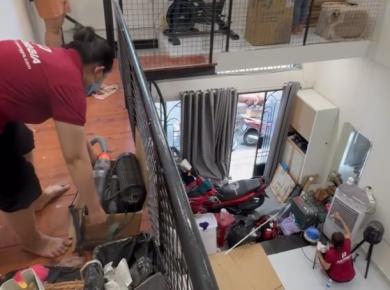


When a company prepares to move to a new office or ends a lease, cleaning the current workspace is an important part of the handover process. However, timing matters. If the office is thoroughly cleaned too early, floors, glass surfaces, doors, and common areas can quickly become dirty again while furniture, equipment, documents, and moving boxes are being transported out.

A more effective approach is to organize cleaning around the relocation schedule. The work should be divided into three stages: preparation before moving day, cleaning areas as they become vacant, and final cleaning after all furniture and equipment have been removed. This sequence reduces duplicated work, makes quality control easier, and leaves enough time to correct overlooked areas before the premises are returned to the landlord or building management.
Quick Answer: How Should an Office Cleaning Plan Be Organized Before Relocation?
An office cleaning plan should normally follow three stages: inspect and prepare low-use areas before moving day, remove waste and clean spaces as they are cleared during the relocation, and perform final cleaning after all furniture and equipment have been removed. Floors, glass partitions, baseboards, restrooms, pantry areas, storage rooms, and previously covered spaces should then be inspected before the keys or access cards are returned.
When Should You Start Planning the Office Cleaning?
The cleaning plan should begin as soon as the company confirms the moving date and the deadline for returning the premises. For larger offices with many desks, filing cabinets, machines, storage areas, and glass partitions, an early inspection helps separate tasks that can be completed in advance from those that must wait until the office has been emptied.
This does not mean the entire office needs to be deep-cleaned several days before the move. The goal is to create the correct sequence. Storage rooms, unused cabinets, and inactive areas can often be handled early, while floors, entrances, loading routes, and high-traffic areas should normally be completed near the end.
| Time | Task | Person Responsible | Expected Result |
|---|---|---|---|
| 3–7 days before | Inspect the premises and define the cleaning scope | Office Admin / Facility Manager | Clear checklist and responsibilities |
| 1–2 days before | Clear storage, unused cabinets and unwanted items | Internal staff | Less waste on moving day |
| Moving day | Remove waste and clean areas as they become vacant | Moving and cleaning teams | Workflows do not interfere with each other |
| After furniture removal | Perform final cleaning and spot treatment | Cleaning team | Premises ready for inspection |
| Before handover | Inspect, document and correct remaining issues | Handover coordinator | Premises ready for return |
Inspect the Current Condition Before Cleaning Starts
A condition inspection helps determine which issues belong to cleaning and which may require repair, maintenance or discussion with the landlord. It also prevents the cleaning team from spending time on items that fall outside the agreed scope.
Compare the Office With Its Original Handover Condition
If the company still has the original handover report, photographs or videos from the beginning of the lease, these materials should be reviewed before cleaning begins. They can be especially useful when the premises include existing flooring, built-in cabinets, glass partitions, blinds, doors or fixtures belonging to the landlord.
Photograph the Premises Before Work Begins
Take both wide-angle photographs and close-ups of stains, scratches, peeling surfaces, damaged areas and unusual marks. These records make it easier to distinguish between removable dirt and physical damage if questions arise during the final inspection.
Separate Dirt From Physical Damage
Not every mark can be removed through cleaning. Dust, footprints, water marks, tape residue and some adhesive stains may be cleanable. Deep scratches, broken glass, peeling paint, damaged flooring or burnt surfaces may require repair rather than cleaning.
Confirm Which Items Are the Tenant's Responsibility
Before assigning work to the cleaning team, the person managing the relocation should review the lease agreement and original handover records. This helps clarify which fixtures must remain, which alterations must be removed, and whether any parts of the premises must be restored to their previous condition.
What Should Be Cleaned Before Moving Day?
Before moving day, focus on areas that are no longer being actively used. This reduces the workload during the final stage without creating unnecessary rework.
Tasks that can often be completed early include:
- Sorting and clearing archive or storage rooms.
- Cleaning cabinets after documents have been removed.
- Removing unwanted cardboard boxes and packing materials.
- Cleaning rooms that have already been taken out of service.
- Removing waste from secondary storage or technical areas.
- Cleaning fixed cabinets that will not interfere with the move.
Full floor polishing or final mopping should usually be avoided while moving carts, boxes, furniture and employees are still passing through the area. Otherwise, the cleaning team may have to repeat the same work later.
What Should Only Be Cleaned After Furniture Has Been Removed?
Areas hidden by desks, filing cabinets, storage units and office equipment can only be properly inspected after the furniture has been removed. This is often when long-term dust, adhesive residue, floor marks and stains that were previously invisible become noticeable.
The final inspection should include:
- Areas under desks.
- Spaces previously occupied by filing cabinets.
- Baseboards and room corners.
- Cable trays and accessible electrical areas.
- Wheel marks from chairs and moving carts.
- Tape and adhesive residue.
- Areas where printers and office machines were installed.
- Spaces behind storage units.
- Floors underneath meeting tables and reception furniture.
Special care is required when working on wood, stone, stainless steel, coated glass or specialized flooring. Cleaning products should be tested on a small, less visible area before being applied to a wider surface.
Office Cleaning Checklist Before Returning the Premises
A cleaning checklist should be divided by area rather than using a general instruction such as “clean the whole office.” Area-based checklists make it easier to identify missed tasks, assign responsibility and perform the final inspection systematically.
| Area | Cleaning Task | Commonly Missed Point | Inspection Criteria |
|---|---|---|---|
| Work areas | Vacuum, mop, clean baseboards and accessible surfaces | Under desks and behind cabinets | No visible dust or rubbish |
| Meeting rooms | Clean flooring, glass, handles and fixed surfaces | Corners and cable areas | No remaining waste or visible dirt |
| Glass partitions | Clean glass and frames | Fingerprints, tape and lower edges | No obvious streaks or adhesive residue |
| Pantry | Clean counters, sink, cabinets and floor | Under cabinets and sink corners | No leftover food or rubbish |
| Restrooms | Clean fixtures, mirrors, floor and sinks | Edges and areas around fixtures | Clean, dry and free of waste |
| Storage rooms | Remove rubbish, vacuum and mop | Behind shelving and in corners | No forgotten property |
| Reception | Clean flooring, glass and fixed surfaces | Area previously covered by the reception desk | Clear and clean |
| Entrance | Clean doors, frames and handles | Door tracks and lower edges | No visible dirt or fingerprints |
Common Dirt and Marks Found After Furniture Removal
Once desks, cabinets and equipment have been removed, previously hidden areas become visible. This is why the condition of an office should not be evaluated only while furniture is still in place.
Common issues include accumulated dust along baseboards, marks left by table legs, wheel marks, adhesive residue, old tape, water stains, dust around electrical outlets and discolored areas behind storage cabinets or office machines.
Adhesive residue should not automatically be treated with the strongest available chemical. Some solvents can damage coatings, discolor surfaces or create dull patches. A safer approach is to identify the material first, test a small section and increase the strength of the cleaning method only when necessary.
How to Coordinate the Moving Team and Cleaning Team
The most important rule is that the cleaning team should not finish an area that the moving team still needs to use repeatedly. Both teams should agree on which zones will be cleared first, where waste will be collected and which routes will remain active during the relocation.
A practical sequence is:
- Pack documents and equipment.
- Separate items to be moved from items to be discarded.
- Remove desks, cabinets, equipment and other assets.
- Collect waste produced during the move.
- Clean each area after it becomes vacant.
- Clean the floor from the innermost area toward the exit.
- Inspect corners and hidden surfaces.
- Perform the final acceptance inspection.
A common mistake is to clean the entire floor before furniture has been removed. Moving carts, cardboard boxes, shoes and equipment can immediately create new dust, wheel marks and footprints, forcing the cleaning team to repeat the work.
Final Cleaning Inspection Checklist Before Handover
The final inspection should take place after cleaning is completed but before access cards or keys are returned. The inspector should follow a fixed route through the premises instead of walking randomly from room to room.
| Item | Acceptance Criteria | Status | Notes |
|---|---|---|---|
| Floor | No visible rubbish, dust or removable stains | □ Pass □ Rework | |
| Glass | No obvious fingerprints, streaks or tape residue | □ Pass □ Rework | |
| Baseboards | No accumulated dust | □ Pass □ Rework | |
| Restrooms | Fixtures clean and rubbish removed | □ Pass □ Rework | |
| Pantry | No food, personal belongings or waste left behind | □ Pass □ Rework | |
| Storage rooms | No forgotten assets or rubbish | □ Pass □ Rework | |
| Doors and handles | No obvious dust or fingerprints | □ Pass □ Rework | |
| Keys and access cards | Quantity checked against records | □ Pass □ Rework |
Common Mistakes That Cause Companies to Return for Additional Cleaning
Most repeat-cleaning requests are caused by small overlooked areas rather than major cleaning failures. A structured final inspection is therefore often more valuable than trying to finish everything as quickly as possible.
- Completing final cleaning before all furniture has been removed.
- Failing to inspect areas previously covered by cabinets.
- Leaving tape or adhesive residue on floors and glass.
- Forgetting storage rooms or built-in cabinets.
- Cleaning restrooms or pantry areas too early while they are still in use.
- Failing to collect the last batch of waste after the moving team leaves.
- Ignoring door tracks, baseboards and lower glass edges.
- Inspecting the space under poor lighting.
- Failing to photograph the completed premises.
- Scheduling the handover immediately after cleaning with no correction time.
Should You Clean the Office Internally or Hire a Professional Cleaning Team?
A small office with limited furniture and light cleaning requirements may be manageable with internal staff. For larger premises, offices with extensive glass, carpets, specialized flooring or tight handover deadlines, a professional cleaning team may be easier to coordinate and better equipped for the work.
| Criteria | Internal Cleaning | Professional Cleaning Team |
|---|---|---|
| Small office | Often practical | May not be necessary |
| Large office | Requires significant manpower | Easier to divide into work zones |
| Machine-cleaned flooring | Difficult without equipment | Better equipment availability |
| Large glass areas | Time-consuming | Easier to assign trained workers |
| Tight deadline | Risk of insufficient staff | Multiple workers can be scheduled |
| Light cleaning | Often manageable internally | May be unnecessary depending on budget |
The decision should be based on office size, available manpower, cleaning equipment, surface types, the level of contamination and the handover deadline. The scope should always be confirmed based on the actual condition of the premises rather than assuming that every area requires the same level of cleaning.
Sample Office Cleaning Plan Before Handover
An Office Admin or Facility Manager can use the following table as a practical tracking sheet. For large offices, each floor, department or zone should be listed separately so that progress can be verified more accurately.
| No. | Area | Task | Timing | Person Responsible | Status |
|---|---|---|---|---|---|
| 1 | Storage room | Remove property, waste and dust | 2 days before | Admin | □ |
| 2 | Work area | Remove furniture, vacuum and clean floor | Moving day | Moving + cleaning teams | □ |
| 3 | Meeting room | Clean glass, flooring and fixed surfaces | After furniture removal | Cleaning team | □ |
| 4 | Pantry | Remove food and clean sink, cabinets and counters | End of moving day | Cleaning team | □ |
| 5 | Restrooms | Final cleaning | Before inspection | Cleaning team | □ |
| 6 | Entire premises | Inspect, photograph and correct remaining issues | Before handover | Facility Manager | □ |
Important Checks Before Returning the Office to the Landlord or Building Management
Cleaning is only one part of returning a leased office. The person responsible for the handover should also review company property, landlord-owned fixtures, access cards, keys, documents and any restoration obligations stated in the lease agreement.
Photographs or video should be taken after the cleaning has been completed. These records do not replace the official handover report, but they provide useful documentation of the condition of the premises at the time the company leaves.
If damage is discovered that cannot reasonably be corrected through cleaning, it should be documented and discussed with the relevant party instead of attempting aggressive chemical treatment that could cause additional damage.
Frequently Asked Questions About Office Cleaning Before Relocation
How long before returning the premises should office cleaning begin?
Initial inspection and cleaning of low-use areas can begin several days before the move. However, the final deep cleaning should normally take place after most or all furniture and equipment have been removed. Always allow additional time before the handover to correct any areas that do not pass inspection.
Should the floor be cleaned before desks and furniture are moved?
Final floor cleaning should generally wait until the major furniture and equipment have been removed. Moving carts, boxes and workers can quickly make a freshly cleaned floor dirty again. Basic vacuuming may be done earlier if necessary.
Does every office have to be completely cleaned before being returned?
The exact requirement depends on the lease agreement, original handover condition and any specific instructions from the landlord or building management. Companies should review these documents rather than assuming that every leased office has the same handover standard.
How should adhesive residue from tape or signs be removed?
First identify the surface material, such as glass, metal, flooring, wood or another finish. Test the cleaning method on a small area before treating the full surface, and avoid strong solvents unless their compatibility with the material has been confirmed.
Who should conduct the final cleaning inspection?
The company should appoint one person with overall responsibility for the relocation and handover, such as an Office Admin, Facility Manager or another authorized employee. This person should understand the required handover scope and be able to request corrective cleaning when necessary.
Should photographs be taken after cleaning?
Yes. Photographs provide a useful record of the condition of the premises after the work has been completed. Take both wide shots and detailed photographs of important areas such as floors, glass, restrooms, pantry spaces and storage rooms.
How should a large office be divided for cleaning?
Large offices should be divided by floor, department, room group or work zone. Each area should only receive its final cleaning after it has been cleared. This reduces interference between the moving and cleaning teams and makes progress easier to track.
Conclusion
An effective office cleaning plan for relocation or lease handover is not about cleaning everything as early as possible. It is about performing each task in the correct sequence. Low-use areas can be cleared and cleaned first, while floors, glass, baseboards and locations previously hidden by furniture should be completed after the office has been emptied.
Before returning keys or access cards, the company should complete a final inspection, check commonly overlooked areas and document the finished condition of the premises. A structured approach reduces duplicated work, helps identify outstanding issues early and makes the handover process clearer for the company, landlord and building management.