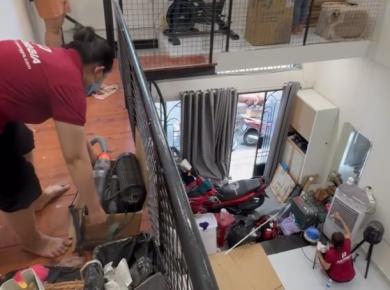


An office restroom may be clean at the beginning of the day but quickly develop problems after several hours of use. Toilet paper may run low, soap dispensers may become empty, trash bins may fill up, sinks may collect water stains, and wet floors may appear. In busy offices, cleaning the restroom only once a day is often not enough to maintain a consistent level of cleanliness, especially before and after lunch breaks or during periods with many visitors.
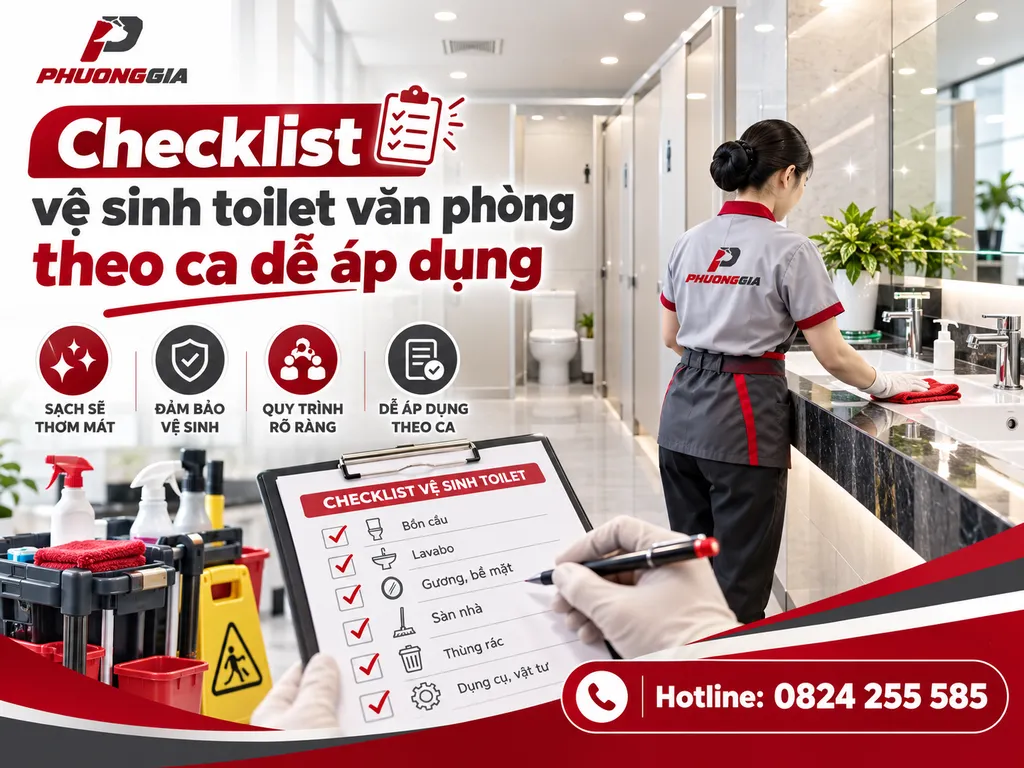
The key is not to increase cleaning frequency blindly, but to define what should be checked at each stage of the shift. A checklist divided into beginning-of-shift, during-shift, and end-of-shift tasks helps cleaners know what to do, supervisors know what to inspect, and the next shift understand what remains unresolved. The template below can be used directly or adjusted according to the number of employees, restrooms, and peak usage periods.
What should an office restroom cleaning checklist by shift include?
An office restroom cleaning checklist by shift should be divided into three groups: beginning-of-shift preparation, during-shift maintenance, and end-of-shift cleaning and handover. Each inspection should cover toilets, washbasins, mirrors, floors, trash bins, high-touch surfaces, odors, consumable supplies, and equipment condition.
| Time | Main tasks | Purpose |
|---|---|---|
| Beginning of shift | Inspect, clean, and replenish supplies | Prepare the restroom for use |
| During shift | Perform quick inspections and handle issues | Maintain cleanliness during working hours |
| End of shift | Clean, remove waste, record issues, and hand over | Prevent unresolved problems from carrying into the next shift |
An effective checklist should not contain only a simple “completed” box. It should also include acceptance criteria, inspection time, the person responsible, and a section for incidents or unresolved issues. This makes the checklist a practical management tool rather than just a record of completed tasks.
Beginning-of-shift restroom cleaning checklist
The beginning of the shift is the time to bring the restroom into a ready-to-use condition before traffic increases. The cleaner should first inspect the overall condition, then clean individual areas and replenish consumable supplies.
Inspect the overall condition first
- Check for unusual odors.
- Check the exhaust fan or ventilation system if available.
- Look for litter, stains, or standing water on the floor.
- Check whether waste remains from the previous shift.
- Inspect toilets, washbasins, mirrors, and wall edges.
- Check faucets, flush controls, and floor drains for abnormal conditions.
This initial inspection helps the cleaner distinguish between normal cleaning work and issues that need to be reported. For example, a floor that is temporarily wet after use is different from a floor that remains wet because of a leaking faucet or pipe.
Clean the main restroom areas
- Clean the toilet bowl, seat, and surrounding surfaces.
- Clean the washbasin and faucet.
- Wipe mirrors and remove visible water marks.
- Clean door handles and frequently touched surfaces.
- Remove waste and replace trash liners when necessary.
- Mop the floor and remove standing water.
- Check corners, partition bases, and areas behind doors.
Check consumable supplies before peak usage
- Make sure toilet paper will last until the next inspection.
- Check that enough hand soap is available.
- Replenish paper towels where applicable.
- Check whether hand dryers are operating properly.
- Prepare spare trash liners if needed.
| Item | Beginning-of-shift task | Acceptance criteria | Checked |
|---|---|---|---|
| Toilet | Clean seat, bowl, and surrounding surfaces | No clearly visible dirt or stains | □ |
| Washbasin | Clean basin and faucet | No visible debris or residue | □ |
| Mirror | Wipe surface | No large visible streaks | □ |
| Floor | Clean and remove standing water | No litter or pooled water | □ |
| Supplies | Check toilet paper, soap, and paper towels | Enough until the next inspection | □ |
During-shift restroom inspection checklist
A during-shift inspection does not mean cleaning the entire restroom again every time. Its main purpose is to quickly identify issues that affect usability, cleanliness, or safety and correct only the areas that require attention.
| Item | What to check | Action when an issue is found |
|---|---|---|
| Trash bin | Full, nearly full, or waste outside the bin | Empty the bin or replace the liner |
| Toilet paper | Enough supply until the next inspection | Replenish before it runs out |
| Hand soap | Remaining quantity and dispenser operation | Refill when necessary |
| Floor | Litter, stains, or standing water | Clean and place a warning sign if wet |
| Toilet | New visible stains | Clean the affected area immediately |
| Washbasin | Debris, residue, or excessive water marks | Perform a quick cleaning |
| Odor | Persistent or unusual odor | Identify the source instead of only masking it |
| Equipment | Leaks, weak flushing, or slow drainage | Record and report the issue |
In daily operations, a restroom may still look generally clean but fail inspection because toilet paper is missing, soap is unavailable, or water is pooling on the floor. A during-shift inspection should therefore assess whether the restroom is ready for immediate use, rather than simply confirming that cleaning was performed earlier.
End-of-shift restroom cleaning checklist
The end of a shift has two objectives: restore the restroom to a clean condition and clearly document anything that needs to be passed to the next shift. This is also a useful time to identify equipment problems that cannot be solved through normal cleaning.
- Remove waste from all trash bins.
- Clean toilet bowls and seats.
- Clean washbasins and faucets.
- Wipe mirrors.
- Clean door handles and other high-touch surfaces.
- Clean floors and corners that are often missed.
- Check whether unusual odors remain after cleaning.
- Replenish supplies for the next shift if required.
- Check faucets, flush controls, and drainage.
- Record damaged or malfunctioning equipment.
- Complete the cleaning log and shift handover.
If a washbasin faucet is leaking, a toilet flush is malfunctioning, or a drain is slow, the cleaner should not simply mark the area as “cleaned.” The handover record should state the exact location, the time the problem was found, and whether it has already been reported.
Sample office restroom cleaning checklist by shift
The following template is short enough for daily use while still providing clear inspection criteria. It can be printed on A4 paper or transferred to Excel, Google Sheets, or an internal facility management system.
| Item | Beginning | During | End | Acceptance criteria | Notes |
|---|---|---|---|---|---|
| Toilet | □ | □ | □ | No clearly visible stains | |
| Washbasin | □ | □ | □ | No visible debris or residue | |
| Mirror | □ | □ | □ | No large visible streaks | |
| Floor | □ | □ | □ | No litter or standing water | |
| Trash bin | □ | □ | □ | Not overflowing | |
| Toilet paper | □ | □ | □ | Enough until the next inspection | |
| Hand soap | □ | □ | □ | Available for use | |
| High-touch surfaces | □ | □ | □ | No visible dirt | |
| Odor | □ | □ | □ | No unusual persistent odor | |
| Faucets and equipment | □ | □ | □ | Operating normally |
The top of the form should include the date, floor or restroom location, shift, inspection time, and employee name. The bottom should provide space for incidents, corrective actions, and the person receiving the handover.
How often should an office restroom be checked during a shift?
There is no single inspection frequency that works for every office. The schedule should depend on the number of users, restroom capacity, working hours, break periods, visitors, and peak usage patterns.
| Usage level | Suggested inspection approach | Signs that inspections should be increased |
|---|---|---|
| Low usage | Beginning of shift, once during shift, and end of shift | Supplies or bins become a problem before the next inspection |
| Moderate usage | Periodic inspections throughout the day | Repeated issues after break periods |
| High usage | Increase inspections around peak periods | Floor, waste, or supply conditions change quickly |
| Frequent visitors | Inspect before and after busy visitor periods | Usage changes unpredictably |
| Meetings or events | Add checks before, during, and after the event | Temporary increase in restroom traffic |
A practical approach is to observe restroom conditions for three to five working days. If the same problem repeatedly appears before the next scheduled inspection, the current interval is probably too long. The better solution is usually to add an inspection during the problem period rather than increasing inspections equally throughout the entire day.
What does a restroom need to meet after cleaning?
A restroom should be considered acceptable when its condition can be verified directly, consumable supplies are ready for use, and there are no obvious issues affecting users. Criteria should be specific rather than simply stating that the restroom is “clean.”
| Inspection area | Acceptance criteria |
|---|---|
| Toilet | No clearly visible dirt or stains on the seat and accessible surfaces |
| Washbasin | No visible debris, residue, or major stains |
| Mirror | No large visible streaks or marks |
| Floor | No litter or standing water that may create a slip risk |
| Trash bin | Not overflowing and no waste around the bin |
| Supplies | Enough toilet paper and soap until the next inspection |
| Odor | No unusual persistent odor |
| Equipment | Faucets and flushing equipment operate normally, or faults are documented |
The more specific the acceptance criteria are, the less room there is for different interpretations between the cleaner and the supervisor. “Floor is clean” is vague, while “no visible litter and no standing water” can be checked immediately.
How can a supervisor quickly inspect the restroom?
A supervisor does not need to repeat the entire cleaning checklist every time. A quick inspection can usually be completed in three steps: inspect visible conditions, check essential supplies, and test equipment that commonly develops problems.
Walk through the restroom in one direction
Start at the entrance and check the floor, trash bin, washbasin, mirror, and toilet area in a fixed sequence. Using the same inspection route each time reduces the chance of overlooking an area.
Check immediately needed supplies
Toilet paper and hand soap may be fully stocked at the beginning of the day but decrease quickly during break periods. Supervisors should therefore check actual availability rather than relying only on an earlier completion mark.
Test equipment when something looks abnormal
Turn on the faucet briefly, observe drainage, and check flushing equipment when there are signs of a problem. A restroom can appear clean while still having a leaking faucet that creates a recurring wet-floor issue.
How should cleaning tools be separated to reduce cross-contamination?
Tools used in restrooms should be separated from those used in pantry areas, workstations, and reception spaces. Even within the restroom, the same cloth should not be used for toilet surfaces, washbasins, and high-touch areas.
- Keep a dedicated set of tools for restroom cleaning.
- Do not use a toilet-cleaning cloth on sinks or faucets.
- Consider color-coding cloths and tools.
- Do not wear restroom-cleaning gloves into other areas.
- Clean and dry reusable tools properly after use.
- Do not place dirty tools on a freshly cleaned surface.
- Use cleaning chemicals according to product instructions.
- Never mix cleaning chemicals unless specifically instructed by the manufacturer.
If the floor has just been mopped, warning signage should be placed where users can see it before entering the wet area. When a chemical requires ventilation or a specific contact time, cleaners should follow the manufacturer's instructions instead of increasing concentration on their own.
What should be done when a problem is found during the shift?
Not every checklist issue can be solved by cleaning again. Employees should distinguish between something they can correct immediately, a supply that needs replenishment, and a technical fault that must be escalated.
| Issue | Immediate action | Follow-up record |
|---|---|---|
| Wet floor | Dry the area, identify the source, and place a warning sign | Record it if water continues to appear |
| Low toilet paper | Replenish supply | No fault report required for normal consumption |
| Leaking faucet | Keep the surrounding area safe and dry | Report to supervisor or maintenance |
| Slow drain | Prevent water from overflowing into walking areas | Record the location and time discovered |
| Unusual odor | Check waste, toilets, drains, and ventilation | Record if the source cannot be identified |
| Faulty flush equipment | Restrict use if necessary | Escalate to the responsible department |
A simple rule is: fix what can be fixed immediately, and clearly record and hand over what cannot. An item should not be marked as completed if the underlying problem is still present.
Common mistakes in shift-based restroom cleaning
The most common problem is when the checklist becomes a paperwork exercise instead of an operational control tool. Every box may be checked while supplies still run out, trash bins overflow, or repeated equipment issues remain unresolved.
Checking only the floor and toilet bowl
Door handles, washbasins, faucets, mirrors, trash bins, and consumable supplies also affect the user's experience. A restroom is not necessarily acceptable just because there is no visible trash on the floor.
Waiting until toilet paper or soap is completely empty
Supplies should be replenished when the remaining amount is unlikely to last until the next inspection, particularly before breaks or other peak usage periods.
Waiting until the trash bin overflows
A nearly full bin should be emptied before a busy period. Waiting until waste spills outside the bin increases both cleaning time and user complaints.
Considering the floor complete while it is still wet
Standing water should be treated as a separate issue. The floor should be dried as much as practical, and warning signage should remain in place while the surface is still wet.
Using fragrance to cover an underlying odor
An unusual odor should trigger an inspection of trash bins, toilets, floor drains, damp areas, and ventilation. Fragrance does not replace identifying and correcting the source.
Failing to document equipment faults
Cleaning staff are often the first people to notice a leaking faucet, weak flush, or slow drain. If the information is not recorded and transferred, the same problem may remain unresolved across multiple shifts.
How should restroom cleaning be handed over between shifts?
A shift handover should clearly describe the current condition of the restroom, particularly any unfinished task or technical issue that the cleaning employee cannot resolve. Writing only “handover completed” provides very little operational value.
- Recheck the main restroom areas before ending the shift.
- Mark the checklist according to the actual condition.
- Record any unfinished work.
- Record the exact location of leaking, blocked, or malfunctioning equipment.
- Check remaining consumable supplies.
- State which issues have already been reported to a supervisor or maintenance team.
- Have the next shift or responsible person acknowledge the handover.
For example, “Washbasin No. 2 leaking, identified at 4:10 PM, reported to Administration” is much more useful than simply writing “sink problem.” The next person immediately knows what happened and what still needs to be followed up.
Sample office restroom inspection log
The inspection log should be short enough to complete immediately after each inspection. The most useful fields are time, location, current condition, supply status, incidents, corrective action, and inspector name.
| Date | Time | Area | Condition | Supplies | Issue | Action | Inspector |
|---|---|---|---|---|---|---|---|
| __/__/____ | __:__ | Floor/Area | Pass / Needs attention | Available / Refill required | |||
| __/__/____ | __:__ | Floor/Area | Pass / Needs attention | Available / Refill required | |||
| __/__/____ | __:__ | Floor/Area | Pass / Needs attention | Available / Refill required |
When an issue is found, enough detail should be recorded for the next person to take action. “Leaking faucet, maintenance notified at 2:20 PM” is far more useful than simply writing “failed.”
How can a checklist avoid becoming meaningless paperwork?
A checklist is useful only when each checkmark represents something that was actually inspected. A long form that employees rarely follow correctly is less valuable than a short checklist with clear and measurable criteria.
The tasks should also differ between the beginning, middle, and end of a shift. The beginning of the shift focuses on preparation, during-shift checks focus on maintaining usability, and the end of the shift focuses on cleaning and handover. Employees do not need to repeat the entire cleaning process at every inspection unless actual conditions require it.
Supervisors should occasionally verify restroom conditions directly rather than reviewing only the signatures at the end of the day. If toilet paper repeatedly runs out, trash bins frequently become full, or the same equipment problem appears for several days, the inspection schedule, employee responsibilities, or handover process should be adjusted.
Frequently asked questions about office restroom cleaning checklists
How many times a day should an office restroom be inspected?
There is no fixed number that works for every workplace. Inspection frequency should depend on the number of users and peak periods. If the same issue regularly appears before the next scheduled inspection, the current interval is probably too long.
Does the entire restroom need to be cleaned at every inspection?
No. During-shift inspections mainly identify issues requiring immediate attention, such as overflowing waste, low toilet paper, insufficient soap, standing water, or newly developed stains. Full cleaning can be scheduled at the beginning or end of the shift or according to a separate cleaning plan.
Who should sign the restroom checklist?
The employee performing the work should record the inspection and time. Depending on the management model, a supervisor, team leader, or administrative employee may verify the condition periodically. The most important point is that the record reflects the actual situation.
When should toilet paper and soap be replenished?
Supplies should be replenished before they run out completely when the remaining quantity is unlikely to last until the next inspection. This is especially important before breaks, peak usage periods, or times when many visitors are expected.
Should separate cloths be used for toilets and washbasins?
Yes. Cloths and tools used on toilet surfaces should be kept separate from those used on washbasins, faucets, and other contact surfaces. A color-coding system can make it easier for employees to identify the correct tools.
What should be done if the restroom still smells after cleaning?
Check possible sources such as trash bins, toilet areas, floor drains, damp surfaces, and ventilation. Do not rely only on fragrance products. If the source cannot be identified, record the issue so that the responsible person can investigate further.
What should a cleaner do when a faucet or toilet is leaking?
Keep the surrounding floor as dry and safe as possible, record the exact location and time of discovery, and report the issue to the supervisor, administration, or maintenance team according to the workplace procedure.
Conclusion
An effective office restroom cleaning checklist by shift should answer four questions: what needs to be checked, when it should be checked, what counts as acceptable, and who is responsible when a problem occurs. When these four points are clear, the checklist becomes a practical tool for maintaining restroom quality instead of merely documenting completed work.
The beginning of the shift should focus on preparation, during-shift checks should focus on maintaining usable conditions, and the end of the shift should focus on cleaning and handover. Start with a simple checklist, monitor recurring issues, and then adjust inspection frequency and acceptance criteria according to actual restroom usage.